A date! A date! A very important date!

526871574_0619de9d78.jpg

Today, I did for the first time what I hope will become a habit: I took myself on a date. I did this at the urging of The Artist’s Way, a book written by a woman named Julia Cameron for people (artists and non-artists) who want to augment their artistic lives. Cameron writes, “We forget that the imagination-at-play is at the heart of all good work … in order to have a real relationship with our creativity, we must take the time and care to cultivate it.” I took her at her word.

My date was to the High’s Annie Leibovitz exhibit, something I’d been meaning to get around to, but for which I had somehow never found the time. After a bright, breezy morning with Ivy and Andrew at the park, I showered quickly (who was there to impress, after all?), threw on my flip-flops and the most comfortable dress I own, and drove to Midtown.

Immediately, I savored the freedom of all this; the bold stroke of life on my own schedule. And it’s not that anyone in my life demands so much of me that it is a burden, but there is something deliciously indulgent about not having to apologize for parking a mile from the museum (in 90 degree weather) because you are too cheap to pay for parking, of walking through an art exhibit alone without feeling the need to respond to anyone’s opinion or curiosity, without worrying whether you’re spending too much time at each photo or not enough. Add to this the fact that I have been waist-deep in Khaled Hosseini’s A Thousand Splendid Suns, and the freedom tasted that much sweeter. (I am so moved by this book, I can’t even write about it yet. If you have not read it, you must.)

My experience with myself and Annie Leibovitz’s photographs (from both her personal and private collections) was filled with both a thrilling appreciation for beauty and startling emotion. I stayed there for two hours, looking for stories in every photo.

I became fixated on one photograph of Leibovitz’s parents on their 50th wedding anniversary, on another of a pool of blood beside a fallen bicycle in Sarejevo, and another of two circus performers: a woman was strapped to a massive red and white bullseye – on her face was a look of total boredom and resignation; a man stood in front of her and took aim with a dagger. I cried at the sight of Johnny Cash, June Carter and Roseanne Cash playing music on their front porch in Kentucky. I cried again when I came to Leibovitz’s photo of bloody footprints left from the massacre at a schoolhouse in Rwanda. Again, I cried at the photos preceding Susan Sontag’s death, and the death of Leibovitz’s father. Leibovitz captured each scene, each tiny moment, with curiosity, dignity, a raw and naked tenderness.

This afternoon, while standing in the High Museum, where everything is brilliantly white and crisp (its design reminds me of what it might be like to live inside an iPod), it struck me that all art – drama, visual art, music, writing, etc. – is connected by that which is alive in all of us. The spirit of great art is the thing that moves us from hope to despair and back again. It leans in to curiosity — not just to beauty and freedom, but also into ugliness and rage. Art is always looking for answers, retribution, a kind of hope that sees clearly the pain and unfairness of the world but continues to demand more of it.

After leaving Leibovitz, I wandered into the High’s museum store and was overcome with the urge to buy something beautiful. I recognized in this a desire to bottle my experience, to bring it home with me and put it on a shelf – as if a painted porcelain bowl or a coffee table book would somehow infuse my living and work space with a better sense of purpose, or some higher plain of artistry.

But the truth is that such things can only stretch so far. Eventually, I would flip through the $75 coffee table book out of moral obligation, would, at some point, pass the beautiful serving bowl and think, with disdain, that it needed dusting. I’m all about cherishing beautiful things, but then again, we have museums for a reason. They show us what to look for and help us to see. They silence the noise in the background and force us to take notice.

To make some odd purchase – a postcard? a High Museum pencil set? a brightly painted umbrella? – would have cheapened the experience for me. As if I’d won myself a stuffed panda by playing skee ball at a country fair. So – the beauty will have to wait for my next artist’s date. Luckily, Cameron prescribes one per week.
Talking to Strangers

975069732_6b0f670603.jpg

At my workplace, there is a little cafe in the office complex. In it work Serena and Sammy, the owners, and whomever they can keep as the scrambled egg and sandwich maker, who stands behind the counter and takes orders. Serena and Sammy are South Korean, and most of the women they hire for the deli job are, as well. When I first started working at the office complex, a woman named Sun worked there.

Each morning, I walked down to the cafe for a cup of hot water for my tea, and almost every day – unless she was very busy – Sun would greet me, saying: “Towles! You are so beautiful! You must make husband very happy.” I would laugh at this, thank her, and order my tea. Sun was desperate to perfect her English, and she loved to chat, so in time, I began to learn a little more about her:

She drove an hour and a half to work each day, arriving around 6:00 am for her all-day shift. Once, when I mentioned I was headed to China, she drew an imaginary map in the air for me, to show just how far South Korea was from the NRC, and where her relatives lived. She showed me photographs of her family – a husband, a son and a daughter, tightly posed and smiling brightly in front of a gray, air-brushed canvas.

When Serena and Sammy weren’t looking, Sun would, with a furtive glance, pass me a fresh biscuit, a cookie or a luscious cube of cantaloupe, shushing me when I tried to thank her. Sun worked hard at scrambled eggs, but she would sometimes confide in me how bored she was with her job, how she longed to spend the day with her music, teaching American students how to play the violin. She invited me to her children’s orchestra recitals, gave me her business card and urged me to pick up a stringed instrument.

One morning, when I went to the cafe for my daily cup of tea, Sun seemed brighter than usual. She announced that she would be leaving the deli. “I can’t take it anymore,” she said. “This is America. I must pursue my dream.” Before I left the deli that day, Sun gave me a little gift bag. I tried to open it there, but she stopped me. I thought that her reluctance to have me open the gift in her presence might signal some kind of cultural difference, and I was keen to respect my new friend’s native customs.

Back in my office, I considered the bag: It was small and silver, embossed with snowflakes despite the spring-like weather. The tissue paper Sun had used to conceal the gift was white and gauzy, and inside was a slip of paper on which she had written a note, thanking me for helping her practice her English and for being so nice to her. The gift she gave me is still such a puzzle – when I opened the bag, I found two delicate, lacy brassieres – one pink, one white – too small for me, but lovely. I giggled – and blushed. I imagined Sun worrying over her choice, the packaging, how to pass the bag over the sneeze guard without anyone taking notice. When I walked down to thank her later, she was gone.

Among all the gifts Sun gave me while she worked at the deli – the conversation, the stolen goodies – this last, dear, strange, funny one taught me the most. There are all kinds of people in the world like this, people who want someone to talk to, people who are full of surprises.

Andrew, the guy who used to work the cash register at our dry cleaners, was, in a former life, in his former country, a classical pianist. I loved to see him drum out tunes on the countertop in time to the music from his headphones. I sat beside a guy named Don once at a Tennessee football game whose memories of Vietnam made me shrink from my own selfishness and indulgence. At my first-ever job out of college, a woman named Nancy owned the convenience store in the building. After I’d gotten to know her, she set me up on a blind date with a guy from the 12th floor (he was British – and another stranger! – but it didn’t work out).

So, over time, I have become slightly obsessed with talking to strangers. I am a little shy, but these people fascinate me – and they are everywhere: on every city corner, in every car on the highway, in fields and big office buildings and in taxi cabs. All of them, filled with life, potential, stories and surprises.

Seeking Narnia

Ok – I’ll admit it.  I have been having a hard time getting back into my blog.  For some reason – and this is really silly – I feel I must clarify that this is not because of anything you, dear reader, have done.  The issue is my own, not lagging numbers or lacking commentaries on my posts.

If I don’t write for a little while, the blank page takes over and begins to creep into my brain.  I freeze up and forget that ideas are everywhere and that the fun is in the Narnia factor: capturing the language so that it paints a picture for people, or moves them, or takes them into a dimension they never imagined they might know.  I stare at the computer screen and think about boring things, things no one would be interested in reading about (like, who are all the people after whom roads in Georgia are named? Are any of them connected?  Could I write a book on them? These thoughts go on for five minutes or more before I come to the stunning realization that I may be capable of forming some of the world’s worst book ideas).  Then, I imagine that the space where my brain should be is actually made up of a vast, dark, miasma of nothingness.  I convince myself that the things I think about are completely insignificant, and therefore unworthy of being written down.

But, now that I’ve started a blog, everything is different.  I am forced out of the nothingness and onto the page by Web-instituted boot camp.   My blog is out there, waiting.  The longer I stay away, the worse my writing will be.  The more I procrastinate, the more ridiculous the ideas will get.  So, I’m back, promising myself to be more consistent, if only for the good of the exercise.

In closing, a quote that defies the nothingness spiral:

“We say we waste time, but that is impossible.  We waste ourselves.” ~ Alice Bloch

The End

379026614_d51c7a884a.jpg

So, I’ve never taken endings very well. Endings to books; endings to relationships; endings to eras – they’re all the same: a mixture of relief and grief tied up in one tidy little moment of closure.

Graduations, in particular, have always brought out the worst of this inherent reluctance. The fierceness with which I cling to my chosen educational institutions and/or professors might, in some circles, be considered gauche, embarrassing, over-the-top.

This week marks the official end of my graduate school studies. And, as excited as I am to shed the day job and get on with a new chapter in my life, there is something deeply bittersweet about the finality of this venture. I wonder if I’ll ever have the luxury of enjoying such a focused education again, or if the idea-sphere is something that can only be cultivated in a classroom. It’s not that I prefer to live life in theory, but that life sometimes seems so much more interesting, and certainly less intimidating, that way.

I am one of the only people I know who could go to school, full-time, for decades and be completely happy. My reluctance to finish things off is, of course, a fear that once I’ve got the diploma in-hand, I’ll slump down into a life in which I forget how to lean in to challenge, or how to celebrate the power of ideas.

Nevertheless, I”m going to try to celebrate this week. Finishing my M.F.A. is a milestone, whether or not I want it to be over. It is a gift with debt (both literal and metaphorical) attached, but a gift all the same. Now I’ve just got to figure out how to go out and use it.

Art

In May of ’06, I lost my dad quite suddenly, from a heart attack. For almost all my life, and for a great big chunk of his, he’d had heart problems, and in recent years he’d begun to slow down more. Still, his death, at 68, seemed so untimely. It opened up a gap in my life as expansive and horizon-hitting as the acreage my dad once farmed.

This gap had to do with loss, of course, but there was something more to it, too. It required of me a shift in identity, a recognition of the place where I grew up – that was so dear to him – as something I would have to claim for myself.

For months, when I would go back home, I felt my dad’s lumbering presence everywhere. He was a deliberate man, an aspect of his personality that has outlived him. Years ago, he planted maple trees in our front yard based on what color they would turn in the fall – how they would blend with the landscape – just one of many examples I could use to illustrate his particular nature.

He had walked the fields around our house for so many years, it was unbearable to be there without his interpretations of the weather or his critical explanations of why the cattle in the new barn by the creek (an addition made by the inexperienced farmer he’d sold the land to) bawled all night long. In the midst of this absence, I found myself needing to make room for my own presence there, to be known less as Ned Allison’s daughter than as someone who could claim a piece of the town and the land I’d grown to love for myself.

My intensified connection to the farm also made it harder to live in the city – a place with which I have always felt a bit at odds for the anonymity it forces and for the astronomically high prices it asks for less than an acre of land.

I write all this by way of explanation for the painting displayed at the top of my blog. Last Christmas, my husband gave me the most touching, thoughtful gift I’ve ever received. It was a proposal more than anything else – for us to find an artist to go to Virginia and paint the farm, so that I could always have a piece of it here with me.

We found Brett Weaver at a gallery down on Bennett Street. He lives in Tennessee, not too far from where I grew up, and he paints gorgeous landscapes touched by clouds that look totally real and alive. We asked him if he’d go to Virginia and do some studies for us. He said yes. When he got to my parents’ house, my mother had made him a box lunch and some lemonade. He painted three studies in the course of a day and we loved them all. The one at the top of my blog is a side view of my grandfather’s house, where my dad grew up.

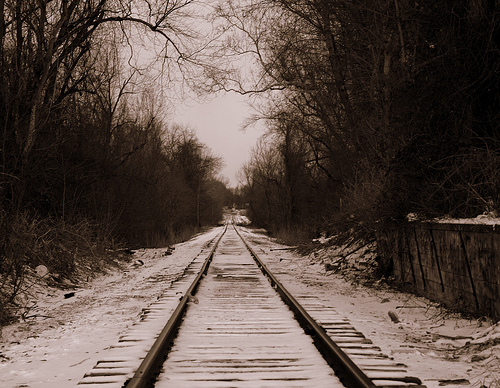
This one is the view of the family farm from across the railroad tracks, where our land ends and someone else’s begins.

towlesk1.jpg

And this one is the view of the landscape from our screened porch:

towlesk3.jpg

My dad would have been proud. To see more of Brett’s landscapes, go to http://www.brettweaverstudio.com.

Southland

Photo by Martin LeBar - Flickr

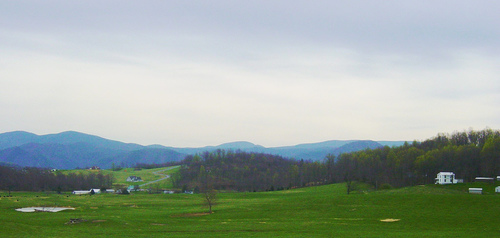
I grew up in a tiny town at the edge of North Carolina and Tennessee, in the foothills of Virginia’s Appalachian Mountain chain. It’s always been a special place to me because half of my family history is there, buried in the rich, generous soil that surrounds the house where my mother still lives. When I was little, my explorations were boundaryless.  My best friend, Neal, and I wandered through stands of trees that led to glades so lush I imagined fairies or dwarves (or both!) had just been there; my sister and I dug for arrow heads – and found them – down by the family dairy barn.

Over the years, and with more sentimentality than I’d like to admit, I’ve written extensively about my home town. In college, I wrote a paper about it entitled “Boomtown”; it took on a life of its own for a time, absorbing all my available brain space and creative capacity. I kept working on it even after I submitted it to my professor because I cared so deeply about its integrity, and because I knew there was no way to say what I wanted to say about a place so set apart, a place so profoundly, indescribably my own.

When my roommates began asking about Boomtown as though it were a family member, or a pet, I knew it was time to let it go. But the effort put forth for that project and the subjects that surfaced because of it were like phosphorescence on a beach in cloud cover: tiny strobes filled with something pulsating and alive, something I wanted to touch.

After Boomtown, I knew two things: 1) That there was nothing like writing that gave me such passion or focus, and 2) That writing about the South was my gig.

People, especially educated people, give the South a hard time. We Southerners have earned a good measure of our infamy; we have behaved badly, acted ignorantly, upheld sorry rules in sorry times. We have shown poor judgment, kept to our narrow ways and spurned inclusion.

But most of us have progressed. And many of us are quite well educated, thank you. And in the midst of that overall advancement, I like to think that we have begun to till fruit-bearing soil again; that our strongest traits – the gracious, big-hearted, hot-blooded, come-hell-or-high-water types – have taken on new life.

We carry with us a stalwart pride in something akin to what I can only call a cultural landscape. This landscape goes deeper than grits; beyond silver-tongued Southern socialites; away from harsh, backward, low-down redneck banter. The depth and texture of it is born of strife, enriched and informed by a complex history of brokenness and fierce independence.

There is a great nonprofit here in Atlanta called the ArtReach Foundation (www.artreachfoundation.org).  It was founded by a woman named Susan Anderson, a passionate supporter of art therapy (“art” here being an umbrella for music, dance, writing, etc.).  In 2000, she and a team of art therapists helped a community in Bosnia begin to heal from the violence witnessed there. Since then, ArtReach has gone to Phuket and the Gulf Coast, creating beauty and signs of life in the wake of total destruction. 

The South, too, has worked to recover from its history by way of art in all its forms.  I know its music best, and it is music filled with life.  From spirituals to bluegrass, the voices and fiddles from the Southland tell stories both funny and tragic, exchanging historic lodestones for levity and compassion. 

As a writer, I approach this cultural landscape with lessons taken from what I know and what I grew up with. I consider my personal history, the people of my hometown, the trends its farmland bucks, and even the South as it will one day be – as a roughed-up plain of dirt spiked with arrowheads.

I must tread lightly here. I must dig. I must uncover. I must separate the bits of rock and turned-up roots from the flint, rough-hewn and ready for battle. I must seek the past and all its meanings with the careful, patient manner of a child who knows that beneath an ordinary pile of dry, fallow soil could be a treasure.

Work

A story about James Joyce:

A friend came to visit him one day and found Joyce sprawled across his writing desk in a posture of utter despair. “James, what’s wrong?” the friend asked. “Is it the work?”

Joyce indicated assent without even raising his head to look at the friend. Of course it was the work; isn’t it always?

“How many words did you get today?” the friend pursued.

Joyce (still in despair, still sprawled facedown on his desk): “Seven.”

“Seven? But James … that’s good, at least for you!”

“Yes,” Joyce said, finally looking up. “I suppose it is … but I don’t know what order they go in!”

– From Stephen King’s On Writing

A Michael Bittner Pic - from Flickr

Writing is hard.

This is something you won’t often hear from those of us who spend our days stringing words together, but it’s true, and there are a lot of books filled with writing advice to prove it.

Stephen King’s On Writing is as entertaining as it is illuminating. Like many other well-known writers’ handbooks (Anne Lamott’s Bird by Bird springs to mind here, too), King’s work of prescriptive genius is a combination of sage advice and memoir.

I approached On Writing with some trepidation. For one, I don’t write fiction. Specifically, I don’t write – or even really read – horror stories (they get too much in my head). But I admire Stephen King for his daring, and for his commitment to truth, and for the ways his wacky ideas fall so gracefully on the page. He is a master of storytelling.

This last fact proved to be no less true in On Writing than it was in It, or Carrie or The Shining. Even readers with little interest in learning how to write would enjoy King’s savvy rendering of writing as a tale worth telling. His love of language springs up amid the antics of his bizarre childhood (fueled by his bizarre imagination) and the drama of his alcoholism and recovery. Throughout, King writes of a dogged, joyful, no-B.S. commitment to his work that is, at once, clarifying, fear-inducing and inspiring.

A few words of Kingian wisdom:

Life isn’t a support system for art. It’s the other way around. (p. 101)

You can approach the act of writing with nervousness, excitement, hopefulness, or even despair – the sense that you can never completely put on the page what’s in your mind and heart. You can come to the act with your fists clenched and your eyes narrowed, ready to kick ass and take down names. You can come to it because you want a girl to marry you or because you want to change the world. Come to it any way but lightly. (106)

Stories are relics, part of an undiscovered pre-existing world. The writer’s job is to use the tools in his or her toolbox to get as much of each one out of the ground intact as possible. (164)

Talent renders the whole idea of rehearsal meaningless; when you find something at which you are talented, you do it (whatever it is) until your fingers bleed or your eyes are ready to fall out of your head. Even when no one is listening (or reading, or watching), every outing is a bravura performance, because you as the creator are happy. Perhaps even ecstatic. That goes for reading and writing as well as for playing a musical instrument, hitting a baseball, or running the four-forty. If there’s no joy in it, it’s just no good. It’s best to go on to some other area, where the deposits of talent may be richer and the fun quotient higher. (150)

An Uncommon Joy

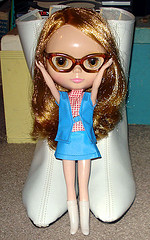
A likeness of Towles & Go-Go Boots

I chose WordPress as the place to house my blog because I liked its name, the imagery of it. Sometimes, I imagine myself working in a big word press. Not a Gutenberg-style word press but alone, at a really cool-looking old table, pressing words, by hand, into paper – with something like hot wax.

I imagine how long it would take me to write an essay using hot wax and my own personal, homemade word press and am then infinitely grateful for my Mac.

Anyway, I recently wrote a book proposal for the manuscript born of my MFA program. I think it’s a pretty good manuscript, and I normally don’t think such things of my writing, but I worked really hard on this one (while holding a full-time job) and I nearly lost my mind in the process. (All real writers lose their minds, don’t you know?) Plus, I had some really great teachers.

As I wrote my manuscript, I sometimes imagined myself as a contestant on that TV show “The Biggest Loser.” I came into the MFA program with a lot of fat in my writing – overly-rosy, wheezy sentences; a tone that one especially keen mentor likened to a voice-over on a History channel war special – and no idea how to lose it. There were lots of people counting on me, expecting me to get better, to surpass the goals I’d set for myself. That this process of mine was not actually part of a reality tv show could not be more of a blessing. These past two years have been a little messy.

But what I realized throughout the manuscript-writing process was this: facing scrutiny is an uncommon joy. It is exhilarating; stomach-squeezing; life-giving. Without it, all good ideas die in the word press.

And this is something I love about education. Something I love, specifically, about being taught. Within the realm of education, as long as it leads to realization, we are allowed to fail and flounder. We are never too lean or too old or too talented to learn something vital; to reach into criticism (terrifying as it may be) and grow; to find ourselves on some surprising, splendid plain of reason thanks to the caring, carefully incisive wisdom of people who have been there, who urge students forward and out of whatever comfortable, simple life-rut they’re walking in.

I don’t have the slightest idea what will come of this manuscript, my book proposal, the strange mating dance we writers have to do to woo an agent. But I am bolstered by the teachers who have believed in me and in my writing, by both the encouragers and the criticizers. Without them, I’d be off working as a compliance officer in some financial services firm (this is only a very slight exaggeration), or washing windows, or wearing go-go boots.

So, here’s to teachers … and uncommon joy.

Pig

**I apologize in advance to the vegetarians who may read this. I love animals (and veggies), too. Also, I’ll be more consistent with my posts now. I’ve been out of town a good bit.**

Allison Family Farm

When I found out my father had died, I was standing in my kitchen. We were having friends over for dinner that evening – two girls and a guy who have kept Ivy for us so often that she knows their names, and starts jumping for joy when we say them.

I was cooking pork tenderloin. The kitchen was hot; the oven on, at 500 degrees.

The last conversation I ever had with my dad was actually about how to cook the meat – more specifically, how long to cook it, and what color it should be when it was done. It was a quick conversation, memorable now only because of its finality, and because of the odd presence of pork tenderloin at both occasions … as though the pig somehow marked the beginning and the end of a small, curious circle.

My dad was a meat man. In fact, he loved all sorts of food. But, as a farmer, he prided himself on knowing all animal parts and their corresponding names – that a “pork butt,” for example, is actually a part of the pig’s shoulder – and knowing how to cook them.

When Andrew and I got married, my parents gave me the Joy of Cooking. I can remember my dad turning with interest to the pages diagramming cow and pig parts. He was almost gleeful – surprising in someone as stoic as my dad – and then serious, admonishing me to study the diagrams, to know not just what to do with my meat, but to know its origins, too. He would have liked Michael Pollan’s Omnivore’s Dilemma, had he the chance to read it.

I thought of this memory today because we’re having friends to dinner tomorrow night, and, as usual, I’m thinking of fixing pork tenderloin.

Despite the shock and sadness I associate with that day in May, the heat in the kitchen, the steamy scent of crispy marinated pork coming out of the oven, I still gravitate towards entertaining with tenderloin. Now, I grill rather than roast it. The meat does better that way, and it saves me the trouble of remembering too much, or of willing some other disaster by way of taking the same steps as before.

But, I continue to cook pork tenderloin. I use the same marinade; consider Daddy’s advice each time I check to see if the meat is done. I do this partly for renewed connection with my dad, but mostly because he would have hated to stand between anyone and a slab of good meat.


Bookshelf

After a two-year hiatus from reading fiction, I’ve picked it up again.

While in grad school, I immersed myself in the writing of great nonfiction authors: Agee, McPhee, Kidder, etc. You name ’em, I at least tried to read ’em. I was undeterred from nonfiction even during holiday breaks, alternating between narrative journalism and memoir in an effort to learn as much as I possibly could while I had immediate access to nonfiction experts (my professors).

To be honest, I didn’t even know how much I missed my cozy novels. I was even a little reluctant to read fiction again. After all, it had been so long, and I tend to treat books – and by extension, genres – like friends. How in the world would we get reacquainted after so much time had gone by? Would it be awkward? Would I lose interest?

Perhaps, I thought, it might lessen the shock to begin with historical fiction, or a smattering of short stories.

Bookworm

But no. As soon as I read the first page of Claire Messud’s The Emperor’s Children, fiction and I were back in good graces. Reading about make-believe characters in a make-believe world reminded me of the delicious escape books can provide. It tucked in the driven, learning-oriented side of my brain, giving it permission to take some much-needed rest.

For once, I wasn’t analyzing the book’s structure as I read, or its author’s interviewing techniques. I was reading for pure enjoyment, having returned to a playground that allowed me to grasp for the monkey bars or clamber across the jungle gym instead of spending all my time building things – or fighting – in the sand box.

Not that we nonfiction writers can’t learn a lot from our fiction sisters. Claire Messud’s descriptions of her characters are priceless. She rounds them out with impressive zeal, making them tangible – describing them more tangibly, even, than many accomplished nonfiction writers portray their real-life subjects. She notes one character’s “resemblance to a baby seal,” and another’s “Nabokovian brow.” Brilliant.

Messud also captures every detail of her characters’ surroundings, knowing – in an almost eerie show of authorial intuition – just what we readers need to see, noting, for example, “a long, plump, pillowed sofa stretched the length of one wall,” at a dinner party. Better yet, she writes that “upon it four women were disposed like odalisques in a harem.”

Yum.

In celebration of my return to a multi-genred life, I’ve set up a “Bookshelf” here on my blog, where all you lovely people can see what I’ve been reading, and where you, too, can recommend great books from your own libraries.

Happy reading …