Not Forgotten

In the weeks following Claire’s birth, I felt a little overwhelmed. This was to be expected, of course – I’ve never had a baby before – but it’s worth mentioning on the blog that one of the major contributing factors to my responsibility overload (and serious guilt-feelings) was – and is – our golden retriever, Ivy.

Andrew and I got Ivy when she was eight weeks old. At a gas station on the Georgia/Alabama line, we met her breeder, Zegie, a woman with a strong country accent and a sweet disposition, and traded cash for lop-eared puppy. Ivy rode in my lap, trembling, all the way home. She was the softest, sweetest thing, all pounding heart and over-sized paws.

Ivy’s grandmother was a seeing-eye dog and her mother had the sleek, muscular build of an American Golden – more akin to an Irish Setter’s bodacious bod than that of the bulkier British Retriever’s. But it was Ivy, not her good looks or family line, with whom we fell in love. The puppy was all heart; she was feisty and mischievous; irresistibly snuggly; nearly human.

As Ivy grew (and grew … and grew) her heart grew even bigger than her paws, her loyalty stronger than the thump of her ever-swinging, golden-flocked tail. In the worst of times, she has catered to us with a sort of divine sensitivity: when I found out my father had died, Ivy leapt to my side, warming the shock out of my system, nuzzling me, as if expressing some sort of shared grief and deep understanding.

In the best of times, she has only added to our joy.

We talk to Ivy as if she is a human. She has only seen the inside of a kennel once in her life. For a dog, she has an astounding vocabulary, including (but not limited to) “Be patient!”, “Find your collar,” and six to ten names of friends and family members. Ivy knows to expect presents (and a chunk or two of real meat) on her birthday, February 1. In short, we have coddled her into human-hood.

Had Andrew and I decided never to have children, this human-treatment of pet would, though odd, pose little problem. But Claire’s arrival has complicated things. Friends, after congratulating us on Claire’s birth, would often ask – with serious gravity – “How’s Ivy doing?”. And the truth is, she’s done just fine, but we have had our hands full.

To feel loved, Ivy needs two walks a day. If we miss one, she gives us dirty looks. Every now and then, when I am in rapt “conversation” with Claire, I will glance over to see Ivy looking seriously despondent. This breaks my heart. When the baby cries, Ivy will often look away from her and sigh, and I worry about canine depression.

In reality, I know she’s just transitioning to a more sustainable place in the family pack, but the transition is hard. Ivy feels superior to Claire, and in many ways, she certainly is better domesticated, less wild, more considerate. I do like to remind her that she was much less trouble than Claire when she was a puppy, but this does little to placate her.

Going forward, Andrew and I are hopeful that Claire and Ivy will become good friends, eager playmates, sharers of little secrets. If our girl is anything like us, she’ll fall easily in love with Ivy, and Ivy, sensing that deep affection, will love her back. My only fear is that I will be the jealous one then, forced to cede the warm, lovey lump at the end of my side of the bed to Claire – a younger, more fun, less distracted version of myself.

Fueling the Rocket

This past December, when Claire was just a kick and a dream, I met with two artist mentors, Tom and Beverly Key. I was feeling pretty crummy about my pregnancy brain at the time, and nervous about my writing career as a whole, and asked them what I should do. Tom told me, simply, to “fuel the rocket.” By this, he meant to read, to find inspiration in others’ work so that when the time came for my writing to launch I would have a sort of literary reserve from which to draw.

Over the past eight weeks, I have taken Tom’s advice to heart. I have been reading like I’ve never read before, and not just children’s books – although there are some quite delightful children’s books out there – but good magazines, especially The New Yorker and Poets and Writers. I love The New Yorker because its nonfiction is so alive, so juicy, so balanced and smart. Poets and Writers, on the other hand, makes me feel I’ve still got one foot in the literary world. It also makes me feel as though I am still in school, which, in a way, I am.

In the March/April issue of Poets and Writers, the poet Mark Doty writes about veracity and memoir. Doty gives the subject a fresh glance, and it is one of the most beautifully written meditations on honesty that I’ve read. But what really touched me was a moment in the essay’s conclusion.

Doty writes about going to a children’s museum in Memphis called the Pink Palace when he was small: “The best exhibit was a tree that had somehow moved indoors. It was huge, at least to me, and dwelt behind a wall pierced with dozens of tiny doors. I could open the doors at ground level myself, and look into whatever scene lay around the roots of the tree: mushrooms, ferns, a stuffed fox. My father would have to lift me up to look into the other doors, and that is one of my best memories of him, the tenderness implicit in holding your son up into the air so he could see.”

As I have been muddling through the first several weeks of motherhood, Doty’s final sentence resonated with me. It captured – in a way I am only now beginning to discover – all that I hope to give Claire: a window through which she can see the world and interpret it for herself. But it also reminded me of my own unique purpose here as her mother. If I am expected to teach Claire new things, to revel in and reflect upon the mysteries and the beauty and the hardship of the world with her, then I must also always be learning.

At first, I wondered if it were all right to spend Claire’s feeding times reading – if she would sense that I was absorbed in something other than her sweet blue eyes – but she doesn’t seem to care. Besides, a steady diet of sound writing is as imperative to me as milk is to her, and this, I think, is the most important thing I’ve learned in the last eight weeks: good mothering means that the mother cares for herself as well as her child.

Yesterday, I went on a swimming expedition in arctic waters; today, I’m in Bengal, tracking tigers. Reading, which once felt like a leisurely, selfish indulgence, now serves a new purpose: it gives me arms with which to raise Claire up, so she can see. It’s exciting to think of all the things she and I will discover together, of the tenderness implicit in that, and how our worlds, big and small, will inform each other.

** My presence on the blog will still probably be pretty sporadic for a while, but not because I want it to be. I’m tutoring through the end of this semester which takes most of the free time I’ve got during the day, but I’ll get back into the rhythm of what Andrew calls “the old life” sometime soon. Thanks for your patience and, as always, for reading!**

Claire.

100_1375.jpg

Three days before my pregnancy came to its welcome end, Andrew looked out our bathroom window and saw something of a wonder: seventeen robins pecking the ground, springing from branch to branch of our scrawny magnolia tree, zipping from one corner of our back yard to the other. Seven more could be seen from the window overlooking our front yard. These precious, red-breasted gifts were only on our property which made for a very bizarre, God-given, Magnolia-esque moment – heavy with symbolism at a time when I badly needed encouragement and promise.

The robin, of course, has always been a sign of spring’s arrival. But, as Andrew and I found out later that day, it is also traditionally thought to symbolize new birth, renewal and patience. By that time, I’d had just about enough of patience, but there was something phenomenal about having nature, itself, remind me of our little one’s assured arrival.

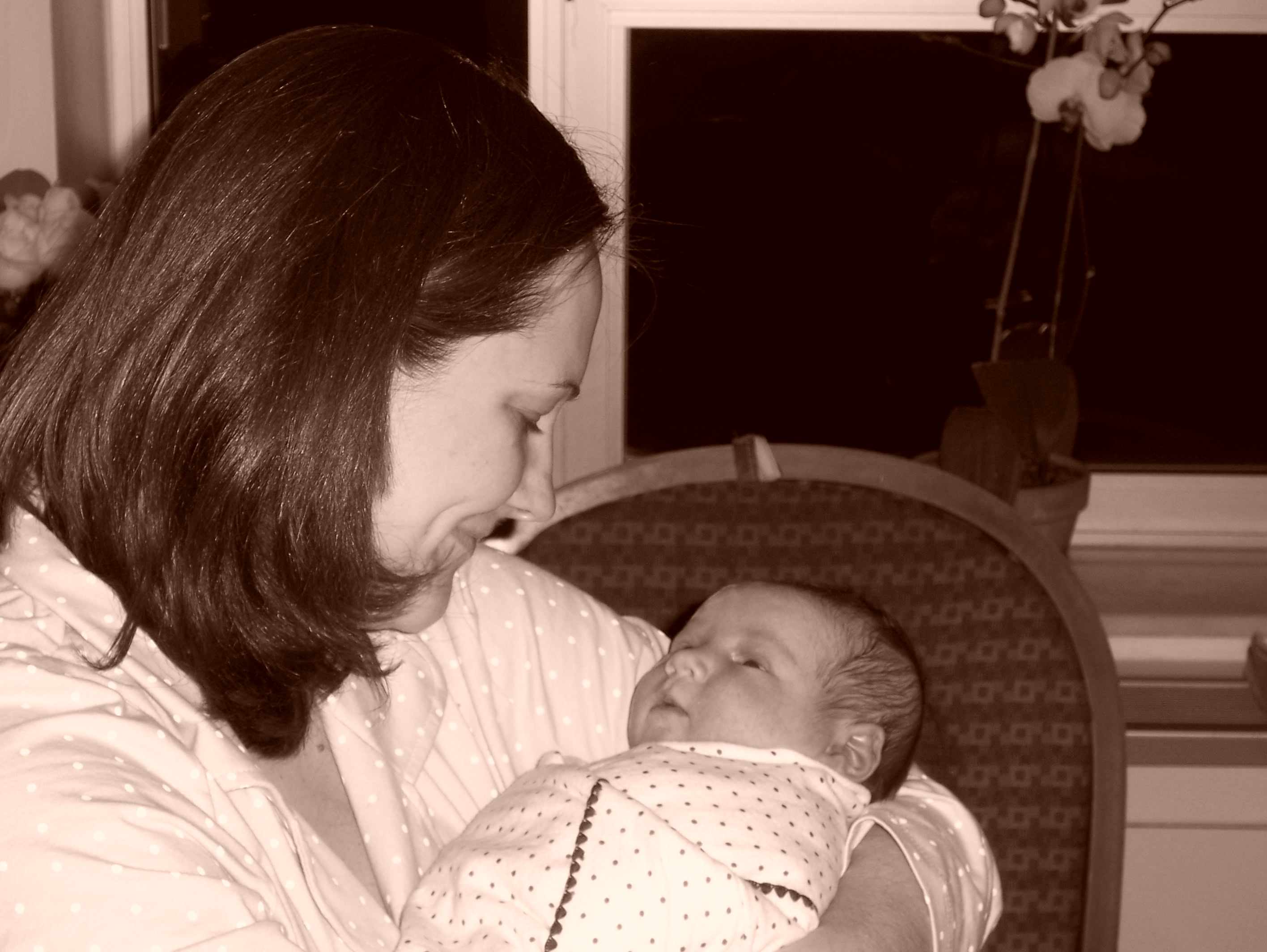
Claire came into the world on February 23rd at 9:56 am. She was, and is, perfect.

On the other side of delivery, I see all the more clearly how appropriate it was that so many robins had gathered in our yard in anticipation of Claire’s arrival; she signals a renewal that is not just physical – though the new baby smell is pretty intoxicating – but spiritual.

To hold a new baby – especially if it is yours – is something like having a tent revival take place in your heart. The patience I cultivated during pregnancy prepared me surprisingly well for the long sleepless nights I have lately been enduring, and there is no encounter – even in the most mundane sense – that does not have an edge of newness to it.

The past week has been a haze of visitors, free food, sleepless nights and diapers. Last night we discovered the power of the bouncy seat; today, because Claire refused to sleep all afternoon, I downloaded Sounds of the Womb, to which she immediately fell into a deep slumber. Due to all this joy and exhaustion, my blog postings will be sporadic for a while. I’ll do my best to keep writing, though.

In honor of Claire’s arrival, a poem about little girls and their fathers:

My Daughter’s Morning

by David Swanger from Wayne’s College of Beauty

My daughter’s morning streams
over me like a gang of butterflies
as I, sour-mouthed and not ready
for the accidents I expect

of my day, greet her early:
her sparkle is as the edge of new
ice on leafed pools, while I
am soggy, tepid; old toast.

Yet I am the first version
of later princes; for all my blear
and bluish jowl I am welcomed
as though the plastic bottle

I hold were a torch and
my robe not balding terry.
For her I bring the day; warm
milk, new diaper, escapades;

she lowers all bridges and
sings to me most beautifully
in her own language while
I fumble with safety pins.

I am not made young
by my daughter’s mornings;
I age relentlessly.

Yet I am made to marvel
at the durability of newness
and the beauty of my new one.

Waiting

1516429596_298747cdb8.jpg

I have never been a very patient person, especially if the things on which I wait seem even remotely in my own control. It’s one thing to have to wait in line at the post office or at an amusement park, but quite another for me to have to wait on myself or my brain to do whatever it has been called on to do.

Growing up, I played the piano. In high school, I especially loved to perform big, dramatic pieces with lots of running eighth notes, but the process of learning the music nearly killed me. As I sat at the keyboard, day after day, learning slowly how to make my fingers conform to the patterns on the page of music in front of me, I wished away my practice time. I begrudged the discipline of hands-separately-then-together, longing for the moment when I would finally get it and the music would flow effortlessly, joyfully out of my fingertips.

This impatience is also often reflected in the discipline I bring to my writing. I am ridiculously intimidated by the blank page and equally frustrated by nonfiction writing’s dependence upon slow research. If I find myself in the middle of writing an essay and realize I need to go back and do more research, I feel like an Everest climber who’s made it half way to the summit, only to realize he didn’t pack enough oxygen to get to the top.

The necessity of having patience in all things makes me a little crazy. I want to jump in head first, roll up my sleeves, and get things done right. At times, patience feels so unproductive that I fool myself into believing that everything would be more fun and/or rewarding if I performed perfectly the first time around. Yet, too often, I overlook the fact that the main reason a flawlessly played Ballade or a well-crafted essay feels so satisfying is due to the work of getting there: without practice, the ligaments in my hands wouldn’t know how far to stretch; my brain wouldn’t rejoice in ideas formed under pressure; my self wouldn’t believe I could be pushed – successfully – to the limits of my abilities, and it wouldn’t even consider taking on the stretch of tougher goals ahead.

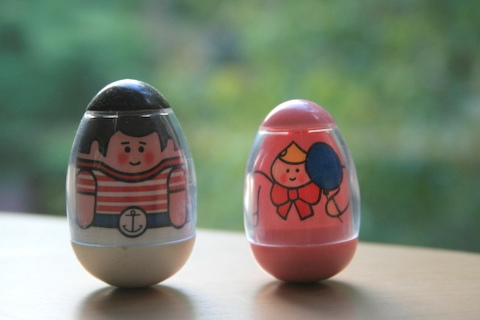
This aversion to patience – and what I have to learn from it – has some bearing on my current state of being. After nine months of baby building, I feel I’ve done my time; another week spent in this bubble bodysuit and Playskool will be redesigning Weeble Wobbles to resemble me! This week, I have been willing the pain of contractions, hoping – with little success – that one will lead to another in quick succession. I imagine myself as my body’s spin class instructor, shouting excitedly into my cavernous womb to get moving and lean in to the pain, to let my techno heartbeat put an end to all this pregnancy madness.

Nevertheless, I’ve learned enough about the discipline of waiting to know that there’s good to come on the other side of patience and that these long, impervious days will fade quickly into joy (and relief) as soon as Baby K makes his or her debut. The downside of this is that his or her arrival will only present a long list of more things about which I must be patient, but that’s a worry for another day. And besides, if I had nothing left to learn or wait on, I probably also wouldn’t have anything to write about, and that would be very sad indeed.

SeymourCornelius

sc-logo-abb.jpg

The doctor yesterday said the baby could arrive “at any time” and I have thus been totally preoccupied by that statement’s many meanings for my life … too preoccupied to do anything productive and/or suitably creative for myself or any of you. Sorry. I would feel bad about this were it not for my sister and brother-in-law’s recent creative launch – SeymourCornelius.

As my own creativity is waning (temporarily, I hope/think), Team Goodrich has come to rescue my blog-readers from boredom/disappointment. Take yourself on a little artist’s date: visit their new, beautiful, cool, well-soundtracked Web site. I would write more, but SeymourCornelius speaks for itself.

Enjoy!

Gourmet Goes South

144134671_2e6038fb20.jpg

“There is something about the South that stimulates creativity in people, be they black or white writers, artists, cooks, builders, or primitives that pass away without knowing they were talented.” – Edna Lewis, “What is Southern?”

Thanks to the internet and the graciousness with which epicurean magazines publish their recipes online, I have come to think of buying foodie mags as a real luxury. I don’t aspire to be a food writer so that’s not a good excuse to shell out $4 per cover, but I gravitate towards the publications’ alluring photos and delicious-sounding recipes, to which the Internet does only partial justice. Once I’ve bought these precious pubs, I keep them for a long time – much longer than necessary – the way unseemly old men keep copies of Hustler and Playboy, stashed away for future feasts and (epicurean) fantasies.

So, like any addict who knows the danger of giving in to her weaknesses, I try to practice restraint in the cooking magazine aisle. But something about Gourmet gets me. I love the swirly, Coca-Cola-like cover-title writing, the luscious-sounding feature recipes, the impression of myself as a very-accomplished-cook-indeed upon execution of the pub’s more complicated dishes. Still – I try to keep my distance. I remind myself that I have a problem, that I own plenty of cookbooks, that I recently gave a truck load of (cooking) magazines away to the American Kidney Fund.

174005705_7ccb979cbd_m.jpg

But this January’s issue of Gourmet – a “Special Collector’s Edition” featuring both Southern cooks (Edna Lewis and Scott Peacock in particular), and Southern writers (Ann Patchett – an old fave) – sent me completely over-the-top.

The writing in this issue is especially good, alive with colorful prose and the sort of Southern delicacies that must make all those New York foodies (who actually subscribe to Gourmet) seriously consider carpet-bagging. The cover photo pays homage to the perfect biscuit and sumptuous blackberry jam; inside, Hoppin’ John, Baked Tomatoes with Crusty Bread, and creamed collards (or winter greens) highlight the best of the South, conjuring, for me at least, the American pinnacle of food-as-experience, food-as-memory.

I come from a long line of wonderful cooks and cooking influences, all of whom are (or were) Southern and who embrace(d) the region’s culinary offerings with zeal. My grandmother, Doll, made the best homemade rolls South of the Mason-Dixon line – and taught my mother to make the same; Stell, the lady who kept me when I was just barely old enough to reach the kitchen counter, made sweet, warm, hand-squashed grape jelly that still makes my mouth water; my father cured his own country ham and sausage, and people from one end of Virginia to the other claimed they’d never tasted any better.

But the thing about all this food – like any good food – is its transcendent quality. In our house, the food and its preparation became dinner table conversation. Analysis of what did or did not go into certain dishes could entertain my family members for an entire meal. And thus, it became a memory made. It became experience shared; a generous gift to guests, hand-made and carefully measured. It became an outpouring of more than just flour and sugar, but of heritage and heart-felt celebration.

I love to cook, and to read about cooking, not just for the deliciousness of the food, but for its deeper meanings and its meaningfulness. A lot of chefs believe in food science, and I’m sure I could learn a lot from them, but in the South it seems we may be more about food-poetry, or food-religion.  I remember reading Laura Esquivel’s Like Water for Chocolate and, thanks to my Southern roots, recognizing something universally true about the Latin American book’s magical realism; for me, cooking has always been tied to a sort of unavoidable emotional outpouring and it seemed perfectly rational for a cook’s emotional turmoil (and cuisine) to affect his or her dinner guests for better or for worse.

In January’s Gourmet, there appears an essay by Edna Lewis called “What is Southern?”. From time to time she references Southern writers (Truman Capote, Carson McCullers) and artists (Louis Armstrong and Bessie Smith), but her most memorable passages embody with down-home eloquence the food she spent a lifetime perfecting. “Southern is a great yeast roll,” she writes, “the dough put down overnight to rise and the next morning shaped into rolls and baked. Served hot from the oven, they are light as a dandelion in a high wind. Southern is a sun dog – something like a rainbow, or the man in the moon – on a late summer afternoon. Southern is a mint julep. A goblet of crushed ice with a sprig of mint tucked in the side of a glass …”.

In Miss Lewis’ words and her passion for good Southern food is deference to and admiration for the culture that created her. Reading her essay makes me wish I’d known her, or that she’d written more, and it gives me new-found respect for Southern hospitality.

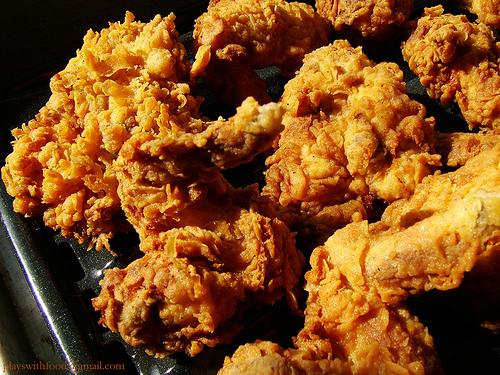
Southern hospitality can sometimes conjure images of white-gloved ladies, lots of sterling silver and general insincerity. But when paired with down-home Southern food, those gloves come off. (After all, who can eat fried chicken while wearing white gloves?) The combination of Southern hospitality and Southern food is a cook’s sincereist form of flattery to his guests; there is nothing more to-the-point.

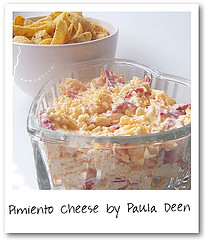
I’ve gone on too long here (maybe I’m an aspiring food-writer after all!), but – you have to admit – there’s something about Buttermilk Cookies and pimiento cheese that is just downright laudable.  Take my advice and go get January’s Gourmet before it leaves the newsstand. Heaven knows I won’t let you borrow mine.

505315688_0f4bce1196.jpg

Space

100_1256.jpg

A room without books is like a body without a soul.
– Cicero (106 BC – 43 BC)

Readers, I apologize for the 10 day lapse in blog postings. I hope some of you are still hanging in there with me. I did not have the baby, as some might have wondered, but simply have not had anything to say for the past week or so.

This weekend, just three weeks away from D-Day, we put the finishing touches on the nursery, which used to be my office, and transformed a corner in our guest bedroom into my new workspace (see above photo). In the past, I’ve had grandiose ideas about the place in which I might best write, imagining a small, sparsely-decorated shed in our back yard with French doors, a lot of sunlight and fresh air, or a nice, bright corner room (in some other, bigger house) with ample desk and bookshelf space and inspiring prints/quotations/magazines/journals/art strewn haphazardly around the place.

While I recognize these imaginings as pure vanity, the thought of cramming my beloved books and necessary files in this tiny guest bedroom corner has still depressed me. I knew it was coming, but hadn’t had the energy or the strength to face it. I’ve been using our living room as an office, perching myself Indian-style on the couch (with Ivy by my side) for hours on end, covering our too-large coffee table with reading materials and the Mac, cluttering the biggest room of our home (which is still rather small) with papers, receipts, and whatever shoes I might kick off in the throws of creative process.

This weekend, APK put an end to all that nonsense. He claimed his own nesting instincts with such enthusiasm he really could have been in his own male-style pregnancy trimester. From the glider in the nursery, I watched as he cleaned out closets, shoving two bags of golf clubs, old briefcases, keepsake boxes and random junk into unspecified locations. He artfully reorganized my bookshelf, rearranged furniture, created a make-shift file cabinet for me out of a little table with hidden trunk-space. By the time Andrew was finished, the guest bedroom corner looked way more professional and organized than my previous “office” (a real catchall room) and was far cozier. Thanks to his efforts, I’ve spent the morning comfortably confined by a real desk in front of a window with a hot cup of tea, plenty of books within reach, and Ivy still beside me.

Throughout my pregnancy, I have been the uneasy recipient of well-meaning ladies’ commentaries on how “life will never be the same” once the child arrives, and intensely annoyed by other misguided attempts at humor in which young mothers claim I’ll want to “put the baby back in the womb” once I’ve had it at home for a few days. Gee, thanks – all that sounds like a lot of fun. (To which these people would respond, “Oh, it is fun, so much fun. It’s just a different kind of fun.”)

So it’s no surprise that fixing up a permanent space for my pre-baby self – the self with a writerly bent and time for creativity – has made me feel as though I am claiming a space, however tiny, that will remind me of what I feel called to. It was silly of me to think that a tangible space would make or break my creativity – a means of procrastination I relied on too easily – or to fear that having the baby take over my old office was a metaphor for him/her taking over my brain space/life/general sense of sanity.

In the end, after all this dithering about where my “stuff” would go and where I might be inspired, I’ve discovered that my physical space could be a table at a coffee shop, or a local library carel, or underneath a tree. As long as it feels like it’s “mine,” the details don’t matter much. The more vital lesson here is that I (and any other writer, regardless of motherhood or other life swings) give myself to the mental space of the work, that I make wiser use of my time, that I hole up in whatever sliver of space exists, do what I have been trained to do, and enjoy it.

Narrative – A Magazine Review

I’d planned on reviewing Special Topics in Calamity Physics, a novel by the young and talented (and beautiful) Marisha Pessl, but I couldn’t get through it in time. I blame this not on the writer, but on my own brain’s current fitful, circuitous state. My mother-in-law and mother, two women whose literary opinions I hold in high esteem, both thought the book was brilliant. It just wasn’t linear enough or short enough for me right now and I needed to give myself permission to put it down.

I’ve been spending a lot of time with magazines lately, both as a means of planning submissions and as a source for inspiration. Narrative Magazine is an online literary journal; in its five years of existence, it has blazed a path of great prestige in the online world. To say you have been published by them means that you are Well On Your Way (if you aren’t already There); in the journal’s current issue are essays by Gail Godwin and Bill Barich, both Guggenheim fellows, fiction by a woman named Ann Pancake, who I happily discovered a few years ago, and poetry by Ted Kooser – the US poet laureate from 2004-2006 – among others.

Whether the writing featured in Narrative is by Guggenheim fellows or by up-and-comers, I’ve found it is consistently engaging, moving, solid and smart. Yesterday, I read a piece by Wendy Sanford called “Bodies.” It depressed me. In fact, it depressed me and the depression stayed with me – which is always proof of good writing. This morning, I read the magazine’s excerpt of Gail Godwin’s “Solo Notes,” and got inspired – and the inspiration has stayed with me. I will feast upon Narrative’s pages until I’ve read each piece even if its writing makes me angry for an entire day, or wistful, because there is such joy and satisfaction that comes from reading good sentences, such affirmation to be found in reading about Things That Matter.

In my opinion, there are few magazines – in print or online – that offer readers such fine work with such consistency. The Establishment once dismissed online publishing as unsophisticated – akin to self-publishing and self-promotion – but we are living in a digital age, and digital media has begun to become very sophisticated, indeed. Best of all, Narrative is free!

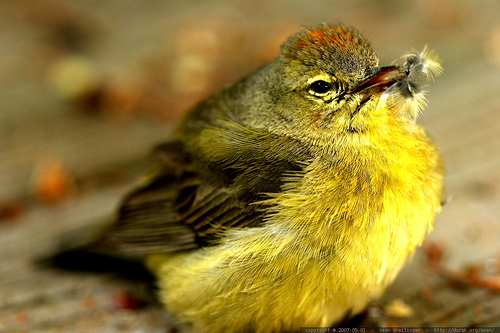
Yellow Bird

480654230_918d32fbb8.jpg

When I was in first grade, my classroom was divided into three groups: yellow birds, blue birds and red birds.  Although no one ever actually said so, it was clear that the yellow birds flew more slowly than the blues, and that the red birds took to the sky most quickly.  This was my teacher’s gentle way of helping young students take to learning at a pace best suited for them.

I was a red bird, but I loved the color yellow – and perfect, chirping yellow birds – and I thought it unfair that I couldn’t sit at the yellow bird table.  Mrs. Hogston, my first grade teacher – a tiny woman with smile lines around her eyes  and a sweet Southern accent – assured me that I should be a happy little red bird, proud of my feathers, and insisted that I stay at the red bird table.  I did so, but begrudgingly, learning how to add and subtract with one eye on the yellow bird table and the other on my text books.

For most of my life, I’ve kept pace with the red birds and I learned to enjoy it.   Yet, now, at a time when I would most like to be dive bombing with a flock of cardinals, I fear my feathers are turning … well … a tinge of yellow.  I’d heard that pregnancy might do this to me, that words would mysteriously slip away; that I might suffer memory loss; that I might – on occasion – make sense only to myself.  But my little red bird brain eschewed such notions as an old wives tale.  It promised to keep processing the material and meaning of life with utmost efficiency; word retrieval problems were for other sorts of pregnant people — not writers, not teachers, not red birds.    

Yet, as I sit composing this blog posting in Starbucks – writing, and then deleting, and then rewriting and rereading the sentences I’ve written – I feel defeated.  My red bird brain has succumbed to the hormones after all.  I find myself staring at my Mac for longer than necessary, the synapses of my brain firing with less enthusiasm than usual.  Staying on topic is difficult; finishing an essay – impossible.  Sometimes, in conversation, my husband has to help me with words.  That thing on the kitchen counter?  Ah, yes – a coffee maker.  The thing we use to walk the dog?  Right.  A leash.

To make myself feel better about this incapacitation I did a little research.  A study published in BJOG: An International Journal of Obstetrics and Gynecology found that 81% of women suffer memory loss and word retrieval problems during pregnancy.  The article called this impairment “significant” – though certainly not permanent – and I rejoiced.  In 1998, the American Journal of Obstetrics and Gynecology published a study confirming pregnant women’s memory loss and word retrieval issues would be most significant in the third trimester.  Another study cited “brain overload” and “memory dysfunction.”  Hooray!

It is hard to be a writer; now I know it is even harder to be a pregnant writer.  I wish I’d done this research months ago. I thought I was just losing my edge because I’m no longer in graduate school.  So – as of today I’m cutting myself a little slack; I am preening my feathers at the yellow bird table.  Forgive me if my blog postings don’t make sense, or if you find them boring, or if I write that something is “obvious” rather than “obsequious.” My red bird brain has flown South for the remainder of winter.  Here’s hoping it’ll come back to me this spring.

Hallelujah

47b6da36b3127cce88266ed00bb800000045118gcnm7hi1o.jpg

It’s Raining Men! Hallelujah!
It’s Raining Men! Every Specimen!
Tall, blonde, dark and lean
Rough and tough and strong and mean …

– It’s Raining Men – The Weather Girls

For some reason I have always had an affinity for the song “It’s Raining Men.I like the imagery of it, and I like its passionate upbeat. I like its singers’ throaty, celebratory tone. I also like that the song contains the word Hallelujah. Recently, “It’s Raining Men” skipped, unbidden, through my head. It was the day after Christmas and I was in the mall, at Brooks Brothers, with Andrew.

Since I was very small, I’ve loved men’s clothing stores. As a little girl, I would hide inside King & Co.’s round racks of suits while my father tried on clothes. There, the smooth, tightly woven fabric of finely stitched wool, silk and seersucker enveloped me. I could peer between the lapels’ fine folds and beyond strong-looking, elegant tortoise shell buttons to observe upstanding men as they stepped tenuously out of their dressing rooms onto the store’s red and green plaid carpet. When they saw themselves in the three-way mirror – out of street clothes and into King’s finery – they stood a little straighter; they tilted their chins up a notch, allowing themselves a brief moment of vanity.

My father, a farmer, had few occasions to wear a suit so we didn’t go to King’s often, but our visits there still impressed me. To this day I find the mingled scents of fresh leather accessories, spicy aftershave testers, and crisp, new-smelling silk and wool enchanting. I admire men – young and old, short and tall, wide and narrow – who worry over stacks of cashmere sweaters, who hold a series of striped ties up to finely pressed shirts, who pull suits from tightly-packed racks and peer at them analytically, considering the clothing’s probable impact at a wedding, or in a board room.

I know that my deference for fine men’s clothing makes me sound old-fashioned – and I guess that I am. I’m a Carey Grant kind of girl: I swoon for men in suits the way other chicks squeal for rockers with gel-slicked hair and leather pants. APK, who cuts a dashing figure in a well-tailored suit, picked me up for our first date wearing a crimson tie, a starched white shirt, a dark suit and a long, black overcoat. He’d come from work, and that he hadn’t even bothered to loosen his tie made my stomach drop. I loved that he wasn’t trying to be cool, and that he stood up straight, and that he didn’t apologize for not having had the time to change clothes.

Now, whenever the opportunity avails itself, I go to Brooks Brothers with APK. For his bank job, he wears a suit daily. This year, he’d worn a few of his best to tatters, which led us to Brooks Brothers’ doors the day after Christmas for the store’s annual mega-sale. We arrived before 10 AM to find the store brimming with men and overheated sales guys. When the tailor, Farhad, saw us, he hugged Andrew and kissed him on both cheeks. Like a math teacher working out an equation on a blackboard, he made quick, deft chalk marks on Andrew’s chosen suits. Farhad commended the choices, acknowledging the suits’ fit and functionality as he marked my husband’s measurements.

Between Andrew’s fittings, Farhad graciously welcomed other customers to stand on the carpeted platform in front of the three-way mirror, and he made them feel good about themselves. The men, in turn, stood up a little straighter with their chins up-raised; they inquired about half-breaks and sleeve lengths; they bought, and bought and bought. Which is when the Hallelujah part of “It’s Raining Men” ran through my head. Until then, I’m not sure I’d known the depth of my gratitude for well-dressed gentlemen, for these old-fashioned snatches in today’s society. Had I been bolder and/or in a Grease-like movie (and, of course, not seven and a half months pregnant) I might’ve done a little Weather Girls’ routine right there in the middle of Brooks Brothers. If I had, I bet I could’ve gotten the guys in the dressing room to buy a few more suits.

Beyond whatever shallow analysis one might take from this random posting, I’d like to point out that observing male shoppers does offer a unique perspective on masculinity. I think that’s why I find places like Brooks Brothers so thrilling: the men’s store gives voice to its consumers vulnerability and pride, their desire not just to command respect, but to be respectful.

For this, I am envious of men’s shopping experiences. In comparison, women’s clothing stores are much more insidious; too often, they feed our insecurities and shame us into buying things that will last only for a trend or for a season. Women are expected to care – too much – about how they look. And while I am not so naive as to think that there’s no hype at men’s clothing stores, what hype there is strikes me as good hype, classy hype, hype geared to affirmation — the kind of hype that makes me, at least, want to dance on a tailor’s platform and sing karaoke.