New Year, New You

2143598133_f3127dca02.jpg

I have spent the better part of today cleaning/organizing my house. If any of you know me well, you might wonder what’s come over me: by nature, I am neither a cleaner nor an organizer.

I tend to stack things in neat piles and leave them to be sorted later … years later. I collect magazines, especially cooking magazines, convinced that I will reference them in the future. I kick off my shoes and leave them lying all over the house. (I then find said shoes lined neatly against the wall beside my closet – thanks to my very neat and organized husband – shaming me out of bed and away from my delightfully good books.)

I used to consider this rather disorganized aspect of my personality proof of my creativity. It was a sort of badge of honor, a testimony to my laid-back nature. But in the past couple of months, something’s come over me: I neurotically sort and organize. I not only clean out my refrigerator, but I also clean – with hot soap and water – its shelves. I recycle magazines. I leave next to nothing on my kitchen counter tops. I sort and file bills. I relish a long walk through the Container Store’s aisles, imagining a house filled with giant, neatly labeled, color-coordinated Rubbermaid bins.

I cannot explain this sudden personality shift, except to say that I think it means I’ve officially entered into the “nesting” phase of my pregnancy. Before last August, I didn’t even know there was such a phase. When a new-mother-friend of mine mentioned it, I laughed it off. Me? A nester? No way.

Oh, but how wrong I was. Over the holidays, I even let my overzealous nesting habits seep into the enjoyment of my time at my mother’s house. She has two refrigerators; I cleaned them both out and organized the shelves by ingredient. I then berated her for the four bags of all-purpose flour I found in refrigerator #2 while ignoring my husband’s gentle, whispered reminders to consider my own repeat purchases of late (cleaning supplies, mostly – a sign of the times).

After I’d laid siege on the refrigerators, I removed stacks of cookbooks and catalogs my mother had left on her couch and put them in a more discreet, but still reachable, location. I wrapped presents with the determined fury of a department store clerk on Christmas Eve. As if my life were hanging in the balance, I loaded and unloaded the dishwasher with furrowed brow; I cleaned off the kitchen table; I swept the counter tops of non-perishables and put them away in cupboards.

There is something divinely satisfying about completing such tasks. But I am also a little unnerved by this sudden, head-spinning change of personality. (No doubt, my mother was unnerved by it, as well.) I wonder if the hormones will ever relent or if I am now – whether I like it or not – a whirling dervish equipped with broom and garbage bag. My only hope is that this productivity and organization will also find its way into my profession – that I will make spreadsheets filled with deadlines I will meet, goals I will strive for and ideas I will act upon, that I will take care of my intellectual life the way I’ve recently been caring for my cupboards.

I would write more, but there’s no time left to muse today — I’ve just spotted a stack of magazines I’ve got to unload.

Godspeed to you all in 2008. Thanks for continuing to read my blog. It’s nice to know you’re out there.

O Holiday

332697372_a1f37d6614.jpg

All this week, I have been battling a terrible cold. The cold began innocently enough – a little tickle in the back of my throat, lethargy at 10 am, that kind of thing. I don’t get sick often and I had forgotten how rotten a cold can be, how paralyzing and depressing. As I sat on the couch on Monday, unable to sleep but near tears because I felt so bad, I got angry.

This cold was screwing up my holiday season.

I put on a Harry Connick Christmas cd in an effort to lift my spirits. I positioned myself on the couch so I could see our Christmas tree. I even made myself a cup of hot chocolate and sprinkled copious amounts of mini-marshmallows on top of it, but to no avail. The cold wanted nothing to do with Christmas. In fact, putting forth the effort to be more Christmasy in the midst of my malaise only made me feel worse.

Right now, as I write this, I am in recovery (though not quite recovered) and therefore in a more genuinely festive mood. I’ve chosen to work this morning at our neighborhood Caribou, and from the window by which I am perched I can see a little girl wearing a pink jacket over a red, plaid Christmas dress (white tights, black patent leather shoes) chasing a bird. She is with her mother, and when they walk into the coffee shop – to meet the girl’s dad, who looks overjoyed when they appear – everyone smiles at them.

For some reason, seeing this happy family makes me feel more spirited than I have all week, and there is no Christmas tree in sight, nothing truly holiday-inspired here except for a fake, too-hot fire in the center of the room and the lingering sound of a muffled, poorly sung “Feliz Navidad” (mixed with the grinding, steamy latte-making sounds coming from the Barista).

This simple scene reminds me to slow down; to allow my body to mend itself; to stop trying so hard to make Christmas happen; to sit and wait for spirit-lifting scenes to appear in surprising places and forms.

I am a huge fan of the holiday season – even at its most crazy points – but, as I emerge from my cold-induced stupor, I wish for you the kind of Christmas that allows you to rest, to look out a window and watch a little girl chasing birds. I hope for you cold weather, a warm dog at the end of your bed, and good health. And while you’re celebrating, have a holiday toddy for me – Baby K’s a bit too young for bourbon-spiked eggnog.

31

 94425785_d6a2c74601.jpg

Last week, I turned 31.  Age doesn’t bother me much, mainly because I still feel young and because I know I am loved.   I have found that this second, sappy-sounding factor goes a long way in securing youthfulness – and I’m not talking just about romantic love, but dog-love, friend-love, God-love, whatever sort of love comes around.

I’ve been thinking about this a lot lately because of a birthday gift my husband gave me.  We went to dinner at one of our favorite restaurants, and when we sat down in the booth he brought out a fat stack of envelopes and put them on the table. APK is one of the funnest and/or most mischievous people I know; in the seven years we’ve been together, he’s taken me on scavenger hunts, stumped me with riddles that lead to great surprises and planned curiously creative Mega-Dates (a term he coined).

So – I was intrigued, but not surprised, to see a stack of envelopes in front of me on the dinner table.  There were thirty-one in all.  APK explained that instead of writing me a note in a birthday card, he’d decided that it would be more fun if he wrote down thirty-one things he admired about me on individual sheets of paper and sealed them in individual envelopes and let me open them one at a time.

This may be one of the best gifts I’ve ever gotten, and I still haven’t even opened all the envelopes.  Some of the messages APK wrote down for me are romantic, but not all of them.  Many of them are empowering compliments, compliments that remind me to rest and be who I am, or to write what I want to write, or to remember, simply, that I am loved.  I put the notes and envelopes in a box, and it’s like the box is filled with magic.  When I am tired or grumpy, or when I stop believing in myself, or when I wish someone were around to say something nice to me, I pull out the notes and my day is at least incrementally better, if not turned around completely.  I think I’m going to decorate my office with a few of them.

I wish everyone had a box like this; in fact, I think everyone should.  People don’t offer others sincere compliments often enough.

After my graduation from college I went on a road trip out West with two good friends, ML and CF.  Somewhere between Wenatchee, Washington and Redding, California, we started playing “The Compliment Game.”  The Compliment Game’s objective was to make everyone in the car feel great, to tell each person encouraging things we’d heard other individuals say about them, but that they’d never heard directly.

One friend might have told me how great CF’s witty sense of humor is, for example, or what a calming presence ML has in times of crisis, but the compliments never quite made it to the intended recipient.  For almost an hour, we connected the dots, making quick work of a long drive and forming one of the two-week trip’s more memorable moments.  I don’t even remember now what compliments were offered to me then, but I remember feeling totally surprised by them, as if I’d just opened a little envelope made out, especially, to me.

Giving people compliments can be a difficult thing to do, especially if the recipient isn’t someone you know well.  Doing so requires humility, a willingness to be somewhat vulnerable, and an intrinsic belief in one’s self.  But it’s also life-giving and can therefore be addictive – kind of like a service project that only requires you to be sincere.

Monkeys & Such

1911583483_af2c3ff19d.jpg

There is a man in our neighborhood who walks the streets with a monkey on his shoulder. The monkey is small and brownish-black and is always partially shrouded by his owner’s gray hooded sweatshirt. The man walks with a long gait. He is tall and lanky, has a coarse gray beard like his monkey’s.

Sometimes the man’s lady friend walks with him; she is petite and blonde and appears to be the monkey’s lookout. When an official-looking car drives by, the blonde keeps power walking while the man makes sure his hood is up and turns his back to the street, as if he is checking out a house for sale. Nevermind the long, black primal tail trailing from his hood, or the blank little face that sometimes peeks around to see what’s up. It is a weird arrangement, and although I’ve been observing it for almost three years, seeing the monkey peeking out from the hooded sweatshirt still catches me off guard.

When Ivy and I are on the street and we happen to pass this odd pair, the monkey bounces and chitters while the man hisses and kicks in the air to keep Ivy away. I wonder what sorts of diseases the monkey carries and I give the man annoyed, peevish looks. The man wears mirrored sunglasses, so I have no idea what sort of looks he’s giving me.

I’m not sure why I’m blogging about this except that I think it’s so interesting that we have a man who ambles through our neighborhood with a real, live chattering monkey on his shoulder; I also don’t often have the occasion to mention this odd neighbor in casual conversation. If he were friendlier, I would ask him for his story. I wonder where he works and if his co-workers know he owns a monkey; I wonder where the monkey came from and what he does when not shrouded by his owner’s sweatshirt hood.

There is also a man who runs around our neighborhood at night carrying an empty plastic grocery bag with him; he appears always to be training for a marathon, always completely exhausted. He stutters. He throws imaginary sticks for Ivy and tries to strike up conversation about the weather, or about dogs. But because he keeps running as he talks, our conversations never get far.

Another guy bikes through our residential streets wearing huge headphones, thick glasses, a black baseball cap, a t-shirt, a backpack and cargo shorts. His hair is long and curly and flows wildly out of the baseball cap, which makes him look like a boy – slightly unkempt; completely free. I always expect to see him coasting down a hill with his arms up-raised, and although he never does this, seeing him ride his bike so joyfully makes me happy.

I am glad to have these odd people in the world. Which is not to say that I want any of them to follow me home or that I have come to like the monkey-man. But I admire their weirdness, how life has not made them so tired that they can no longer be themselves, can no longer walk with monkeys on their shoulders or throw imaginary sticks. These three men are harmless, but I know people who would be afraid of them because they are different. I try not to be that way.

Lately, I’ve been trying to read a little poetry every day. These few lines are from Mary Oliver’s poem “When Death Comes”:

And therefore I look upon everything
as a brotherhood and a sisterhood,
and I look upon time as no more than an idea,
and I consider eternity as another possibility,

and I think of each life as a flower, as common
as a field daisy, and as singular,

and each name a comfortable music in the mouth
tending as all music does, toward silence,

and each body a lion of courage, and something
precious to the earth.

When it’s over, I want to say: all my life
I was a bride married to amazement.
I was a bridegroom, taking the world into my arms.

The Writing Life

 195783511_37ed17a1cf.jpg

“Freedom lies in being bold.” – Robert Frost

When I tell people I’m a writer, they get very excited. I’m not sure what they imagine when I tell them about my profession, but the reactions I’ve received imply something really dreamy – as if my days are filled with the kind of exhilaration also known by Arctic explorers and trapeze artists.

The truth is, when I am actually writing my days do sometimes feel bound only to creativity and adventure. When I am plowing fields of words or walking uncharted terrain with a new character, life really could not be better. But given the way most of my days shape up – the query letters, mostly bound for rejection, the internal and external land mines I must navigate, the “writing jobs” that pay only $10/hour – I find these strangers’ enthusiasms mystifying.

I wonder if I have somehow missed out on the hidden magic that lies within a writer’s life. I envy those who think for me a life of full-time reading, creativity, bliss. I wonder if it wouldn’t just be better to imagine myself a writer, and this edges me closer to the other side: the side that believes in practicality; the side that heralds the decision to become a bank teller, a Jeanie, or a dog walker. (I have considered, at one point or another, all three.)

Yet, if there is truth to Robert Frost’s quote, above, then I am on a path to freedom, allbeit crooked and kind of muddy. Claiming space for myself as a writer – despite what the world would like to tell me about other, more practical, “worthwhile” professions – is one of the boldest things I’ve ever done.

I’ve been reading Annie Dillard’s The Writer’s Life and have been so encouraged to learn of the land minds she, a Pulitzer-prize winning author, navigates as she writes. She must have a room without a view; she questions the accessibility of her work. She wonders why she spends her time doing something that she dislikes so often, and why she didn’t choose to be a ferry operator or a wood splitter instead.

I haven’t made it all the way through Dillard’s book to know her answer yet, but I think it must have something to do with Robert Frost. There is freedom in being bold, in taking the risk on oneself — just as there is freedom to be found in the knowledge one pulls from themselves or from their subjects as they’re writing.

Donald Hall has said, “Mere literary talent is common; what is rare is endurance, the continuing desire to work hard at writing,” and I think he could not be more right. The people who make it at this job today have a mental and emotional toughness I am only just now coming to realize. The industry demands that writers have it, demands that they be able to maintain artistic integrity AND sell out the shelves at Barnes and Noble.

While on a recent road trip, Andrew and I popped Thoreau’s Walden into the tape player and listened as his beautiful language rolled past. I began to wonder what his book proposal – had he written one – would have looked like, what sort of marketing spin he could have offered to an agent, how he would have convinced him or her that at least ten or twenty thousand people would want to buy his book, if not more. The sad truth of the matter is that beautiful writing and timeless, overarching themes (alone) don’t appear to sell books anymore, and I wonder how many Thoreaus the world is missing out on.

This, in practice, is not a very good thing to think about, and I do not encourage it. However, it’s worth mentioning in a public forum because I want to urge people – not just other writers or teachers, etc. but regular American people – to look beyond the bestseller list, to explore a book or (!) a literary journal (!) or a magazine that might be intriguing and/or delightful, but just slightly off the beaten path.

Oh, does everything come back to Robert Frost? Go take the road less traveled by …

Great With Child – A Book Review

100_1197.jpg

** I’ve decided to take my friend Richard’s advice and begin reviewing books on my blog.  I’m hoping that this will motivate me to read more voraciously.  ** 

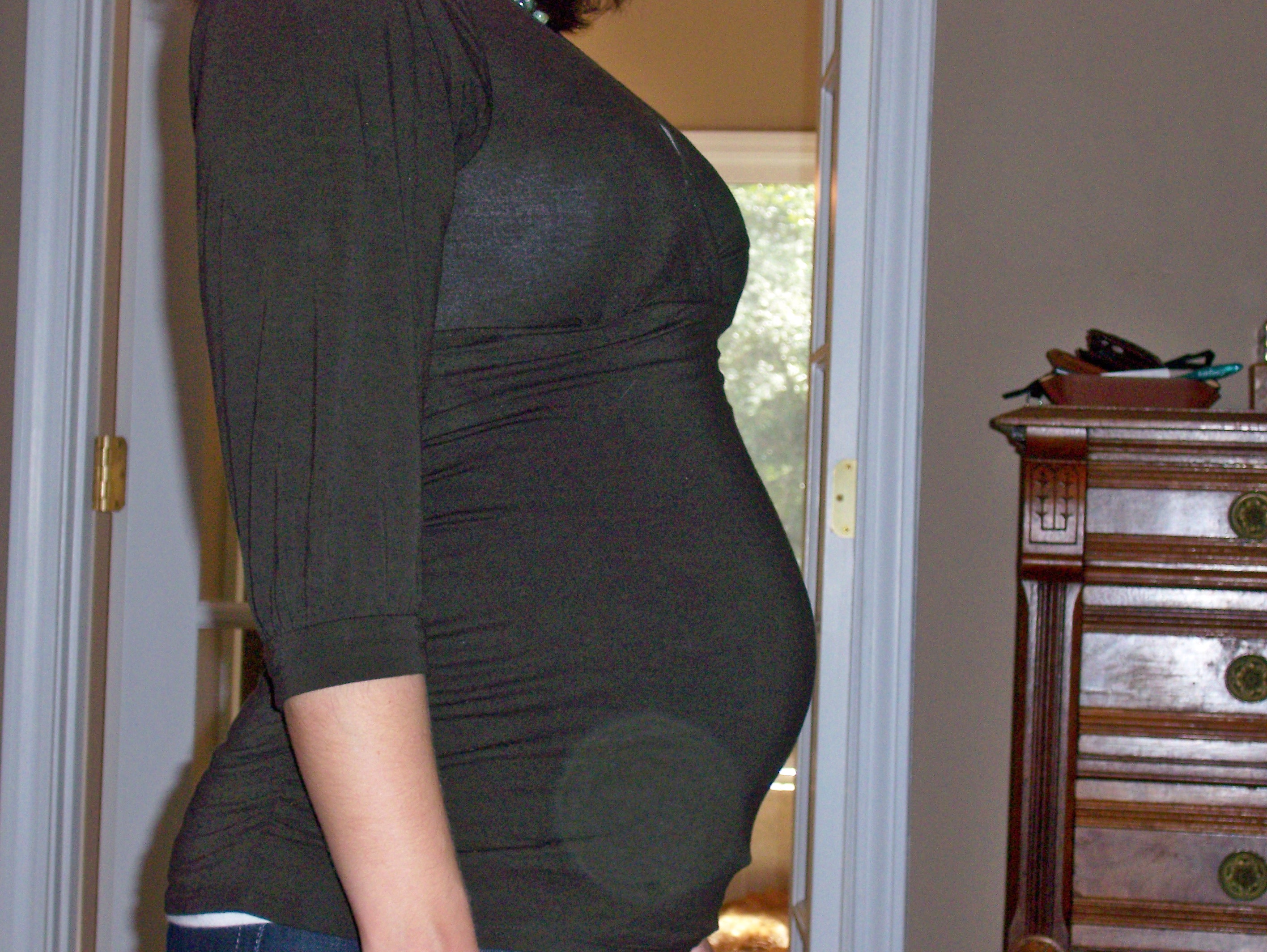
There are a lot of books on the market about pregnancy, and even more, I’m sure, about parenting. I dislike these books. I say this a few weeks into my third trimester after receiving (from well-meaning friends and acquaintances) a stack of them almost as tall as my bedside table.

Of these many texts, the ones I’ve thumbed through have left me feeling somewhat uneasy, or alarmed, or angry.  I nearly threw one across the room.  The marketers of these books impose a sort of moral authority over pregnant women, suggesting through various means that one will be an unfit mother unless she reads What to Expect When You’re Expecting from cover to cover.  The books also appear to be written by people who might also, say, have too-strong opinions about things like the NRA, or taxes, or the space shuttle program. Like heat-seeking missiles, the writers target with remarkable focus expectant mothers’ unique vulnerabilities, sending already tweaked-out hormones into a new and utterly unpredictable frenzy.  The authors of these books take on the sort of know-it-all tone that used to make me want to hit someone hard with a kickball when I was in middle school.

My doctor’s first word of advice to me, when I was just eight weeks along, was to rely on her when I had questions or fears and to avoid all books and web sites concerning pregnancy and childbirth. She needn’t have worried.

But among the stack of pedantic, agenda-driven pregnancy books there is one shining gem: Great with Child by Beth Ann Fennelly. Fennelly is a poet and professor of writing at Old Miss who wrote a series of encouraging letters to her friend Kathleen during K’s pregnancy. In Great With Child – the book that resulted from these missives – Fennelly, who herself has two children, gives pregnancy and parenthood its due while celebrating (and sometimes bemoaning) its mysteries and its madness. She offers Kathleen both grace and freedom, covering topics from miscarriage to the administration of pain medication to work/life balance with a calm, supportive, reassuring voice.

Great With Child will not tell expectant mothers when their babies’ ear drums are forming, this is true, but Fennelly’s poetic sensibilities offer readers a broader, more literary and more powerfully feminist view of what it means to be “expecting.”

Color Me Beautiful

126836000_c7eb36d46f.jpg

For a writer, I have woefully expensive taste.  I have always been this way.  If asked which of four silver bracelets, pairs of running shoes or pieces of china, I like best, I will, without hesitation, choose the most expensive of the bunch.  (I’ve tested myself on this several times, hiding my eyes from the prices of said items.)

I come by this honestly, right down the maternal line.

In the old days, my grandmother, Doll, drove an hour and a half from her Tidewater home to Richmond, Virginia to shop at a lovely department store named Thallheimers.  She had a weakness for fitted ultra-suede suits,  sleek Ferragammo high heels and well-tailored, stylish hats.  After buying three, sometimes four, hats from the department store’s millinery, she would return home – well before my grandfather – with booty in tow.  Doll would show just one of her day’s purchases to my grandfather and stash the rest of the big, round hat boxes beneath her four-poster bed.  After a reasonable amount of time had passed, she would pull another hat from her stash.  My grandfather never knew the difference.

My mother, too, has a weakness for beautiful things.  She loves new cars, bed linens made of high-thread-count cotton, good jewelry and dogs with distinguished pedigrees.  My father, unfortunately, did know the difference, so there were no hidden hat boxes beneath her bed, just as there are no hideaways beneath mine.

Nevertheless, I’ve maintained my penchant for small luxuries: pedicures; magazines; Mrs. Meyers geranium-scented counter spray; and good makeup.  Yes – makeup.  While I’m sure that Maybelline and L’Oreal make stuff of fine enough quality, I am drawn to the mall’s shiny, crystal clear makeup counters with an urgency that defies intelligence.  I revel in the sheer vanity of good makeup, the blissful thirty-minute makeover sessions, the glee reaped from new cheek colors and sparkling eye shadows, perfectly sculpted lipsticks and luminescent glosses.

Last week, this weakness got the best of me.  After a lengthy day of writing and tutoring, I had plans to meet a friend for coffee.  Only traces of the scant makeup I’d put on in the morning remained.  Dark circles, intensified by droopy mascara, ringed my eyes.  I looked this way partly because I’d applied my makeup while driving that morning, and partly because I’d recently run out of concealer.  But the mall was on the way, and I imagined I could pop in to Nordstrom’s quickly and solve two problems – the droopy circles and my need for new concealer – at once.

I’ve read enough copies of Allure magazine in my lifetime to know that a girl should never go to a makeup counter looking the way I did, and that, once there, she should say, “I need concealer number 3,” not, “I’m looking for concealer, but I’m not sure which shade.”  Yet, I broke both rules.  With raccoon eyes and disheveled hair, I shuffled over to the TM counter and asked for help.

Jeanie, a perfectly powdered saleswoman, took one look at my bulging belly and faded foundation and her eyes lit up.  She’d just hit pay dirt.  Before I knew it, I was in the midst of a hard core makeover.

“What kind of foundation do you use?” Jeanie asked innocently.  I explained that my foundation was actually a tinted moisturizer, made by TM Competitor X.  She rolled her eyes and shook her head, as if I’d just told her I put dog food on my face each morning.  When she asked how I applied my makeup (to which I actually responded “with my fingers, in the car”) I knew I was in deep trouble.

Jeanie assured me that after thirty minutes with her (and a hefty sum spent on new TM makeup) I’d become the most beautiful pregnant person the world had ever seen.  She complimented me on my beautiful skin (once “good” foundation was applied), my motherly glow (once brightener was applied), and she feigned disbelief when she learned I’d recently entered my third trimester (unfortunately, no high-end makeup to help the bulging belly, but she could probably tell I needed the compliment).

Under normal circumstances, I’d like to think I’d see through Jeanie’s ruse.  But, in the thrilling midst of the high-gloss makeover, I buckled.  Would I like the brightener?  Yes.  The concealor?  Certainly.  The new foundation?  But of course.  A professional brush with which to apply my high-end makeup?  You bet.  The kicker came when Jeanie convinced me I needed a new TM makeup case to help me stay organized once Baby K arrives.  I can’t believe I said yes to that, but I did. At least when Jeanie asked (with new urgency) if I needed any mascara, I resisted.  Everyone knows only the truly duped fall for makeup counter mascara.

I left the mall feeling utterly taken, but – now at least this is true – prettier than I have in a while.  Thankfully, Nordstrom’s accepts returns on unopened makeup (and overpriced makeup organizers), and Jeanie wasn’t there the following day to rebuke me.

Don’t worry – I kept the concealer … and the foundation … and the brightener … but I took all the other stuff back.  If Gay Talese could indulge in handmade Italian suits and leather shoes at the beginning of his writing career, a little good makeup won’t hurt mine.

The Pilgrimage (or, the Longest Blog Posting Ever)

100_0856.jpg

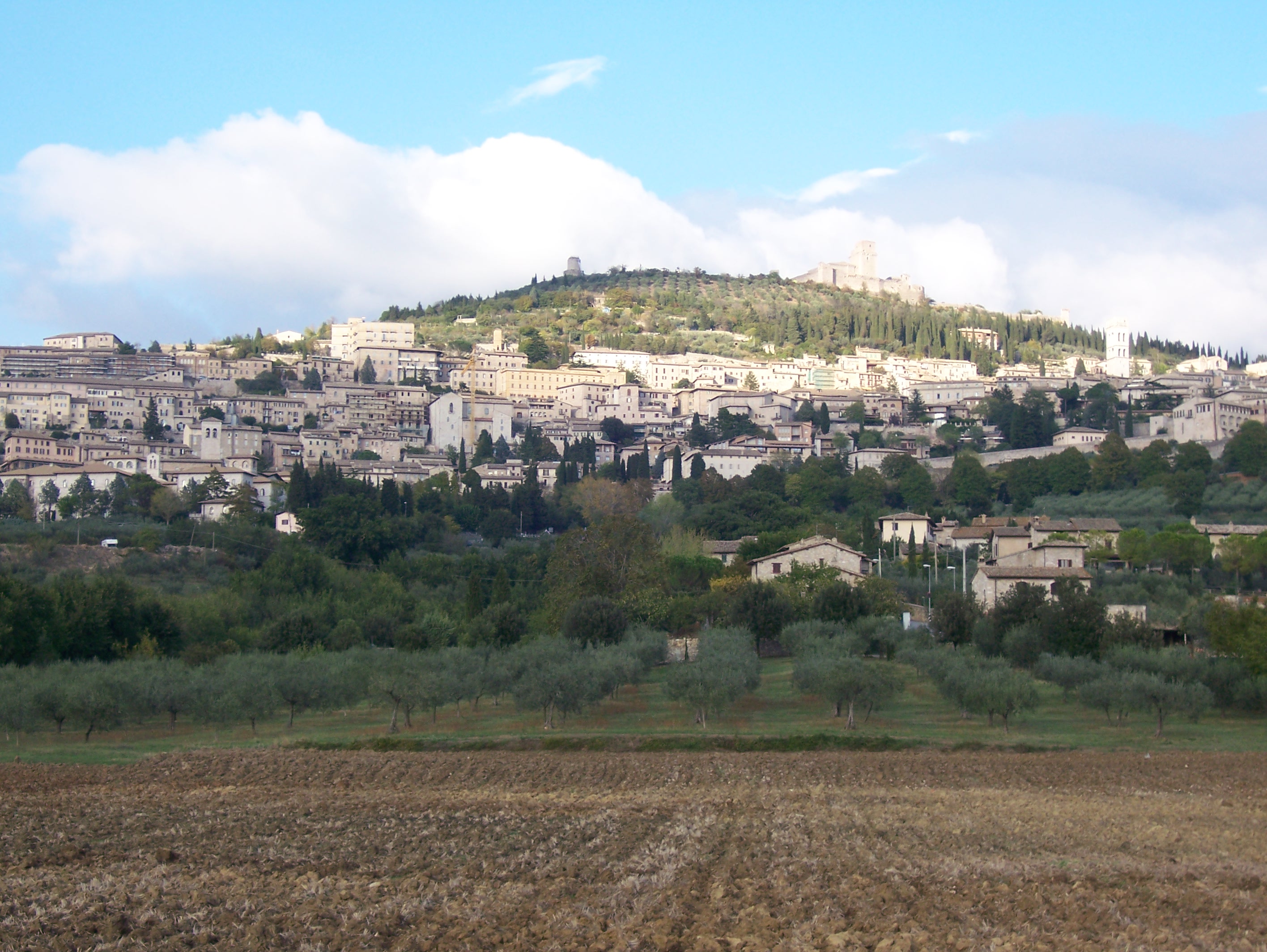
One gorgeous Sunday in Italy, Andrew and I decided to go to Assisi. We were drawn there because of our guidebook’s glowing remarks about it, but also because of its sacredness. St. Peter’s and the Vatican are of course known for their outward pronouncements of institutional faith, but Assisi, made famous by St. Francis and his Friars’ gentle, faithful reverence, exuded – so we had heard and read – a different, more personal brand of spirituality.

After spending the morning in Perugia, eating chocolate, we drove thirty kilometers to Assisi. From the Autostrade, we could see the town in the distance, and it looked like it had been blessed. The old buildings, sitting high on a hill, gleamed white in the sunlight. Mount Subasio, behind the town, was shrouded in a God-like cloud, the shadow of which lent Assisi even greater gravity and promise.

After taking the exit for St. Francis’ homestead, we found a free parking spot at what we thought was the edge of town, and hopped out of the car, eager for enlightenment. As we approached what we thought was a former Temple to Minerva (converted to a Temple to Mary), we noticed a throng of young people carrying large flags and rucksacks. There must have been at least two thousand of them, hanging out around the “temple,” and many of them looked as though they’d just woken up. It was about 2 pm.

Upon closer inspection, Andrew and I realized that this was not the Temple to Minerva/Mary, but a regular cathedral, so we began walking past the throng of shabby, rowdy youngsters and toward Assisi, still far in the distance. As we walked along, we began to notice that the throng was not limited to the piazza/cathedral, but that it was traveling with us – or we with it.

I began to feel a very bad mood creeping in. The teenagers, all of whom were Italian, smoking cigarettes, and talking loudly, were ruining my deeply spiritual experience.

Andrew, as is typical of him, had a much better attitude. “We’re part of a pilgrimage, Towles!” he said. “I’ve never been part of a pilgrimage!” An image of the cook — with the oozing sore on his leg — from Chaucer’s Canterbury Tales sprung to mind. I grimaced. “I’m not into pilgrimages,” I said. We kept walking, passing vendors selling t-shirts (one said “Enjoy Cocaine” in Coca-Cola script) and massive flags emblazoned with Fidel Castro’s face. A boy who looked to be about fifteen marched alongside us, kicking a soccer ball up the street. As the road narrowed, the crowd with whom we were walking began to close in; the flags, many of which were rainbow-colored and displayed the word “PACE” (peace, in Italian) in block letters closed in on us, too.

This was no pilgrimage; it was a peace march, and we were the only Americans in the throng. I felt like a yuppie at Woodstock. The HippieItalianKids (HIK) were all wearing t-shirts denouncing weapons of mass destruction or protesting “Dal Molin,” a proposed American military base on Italian soil, and carrying the rainbow Pace/Cuban Castro flags.

After walking about eight kilometers with the throng, the road began to grow higher and more narrow. The marchers slowed, and then stopped completely. At this point, we were about two kilometers from Assisi’s gates; on the steep banks around us had been planted beautiful, dainty, pink roses. Andrew (no longer as chipper about our Great Pilgrimage) and I (almost in tears) were hemmed in at all sides; the crowd had grown to what must have been fifty thousand smoking, flag-carrying, loudly-chattering people. A young woman in front of us fainted. Around us wafted the distinctive smell of pot. In a moment of panic, I imagined us getting trampled at Assisi, the sweet Franciscan friars charged with finding our next-of-kin.

Around us, in an effort to get around the bottleneck, rowdy (high) teenagers began to climb the lovely rose-covered banks, trampling both the flowers (ripping some at the roots) and the Franciscan’s irrigation system. A few girls slid down the banks on their backsides, taking foliage with them, laughing mercilessly.

Once we finally (FINALLY) reached Assisi, I thought we could salvage our spiritual journey and break free of the crowd, but there were fifty thousand more “pilgrims” in St. Francis’ square, jabbering loudly in his cathedral (despite the Friars’ repeated requests for silence), playing hackey-sack in front of the church and laughing loudly in the crypt holding St. Francis’ tomb. Worst of all, outside the lower chapel, someone had organized a Bike-a-thon for PACE, and there were at least two hundred stationery bikes set up there; on the bikes were Italians decked out in spandex, participating in what looked like an American spin class, complete with thumping bass and a militant, barking instructor.

You know, I’m sure this all sounds very judgmental. And believe me, as I sat in St. Francis’ crypt praying that I would get out of Assisi without screaming at the top of my lungs at one (or all) of the HIKs, I also prayed I could find a way to appreciate them, and to believe they actually had a cause.

But that was the problem. The Italian kids, now wearing the PACE flags like Superman capes, weren’t serious. They were marching up to the gates of Assisi and trampling the Franciscan’s flowers and smoking pot outside St. Francis’ tomb because a friend of a friend said the peace march would be fun. They didn’t chant in protest of Dal Molin, or burn American flags, or sit, prayerfully, holding candles, for a peaceful solution to all the world’s heartache. They milled through the cathedral with passive, glazed expressions. They kicked around a hackey-sack and sang Italian love songs to some kid’s poorly played guitar.

I don’t think I have ever been so outraged – and not outraged for myself anymore, but for St. Francis and his Friars, and for all of the people who take, with dead seriousness, a place’s sacredness and the business of war protests.

After seeing all we could see in the midst of the PACE people, Andrew and I fled Assisi. On the way, to avoid the throng, we took an alternate road that cut through tilled fields now growing hazy in the setting sun. At last, it was quiet (except for the distant sound of pumping, spin-class-bass), and we could walk freely without stepping on any PACE flags.

In silence, I handed Andrew the last of our Perugina chocolate – the only thing that had saved me and Baby K. from expiring on the 10 mile trek – and sighed. When we reached our car, teenagers were piling into big, blue chartered buses covered in PACE flags, looking almost as tired and beleaguered as the two of us; acknowledging my own sore feet and back, I almost felt sorry for them.

Upon our return to the States, we would find that the march, as a whole, was composed of almost 200,000.


Interpreting Joy

bloomingpetals40x40.jpg

Earlier this fall, I founded a little artist’s group. I knew from previous freelancing experience how isolating (and depressing) it can feel to sit at home all day without access to humans except via email, and I was keen to find a way around that problem this go-round. At the recommendation of a knowledgeable friend, I picked up a book called The Artist’s Way, aimed at nurturing the creative spirit. The author, Julia Cameron, suggests readers form “creative clusters” for support and community.

My creative cluster consists of Kristina, a visual/decorative artist, Kerie, a photographer, Natasha, a graphic designer, and Laura, also a photographer – all women I respect and admire not only for their artistic talents, but also for who they are as people. Although we’re all in different creative fields, when we meet, we discuss the same sorts of things – how to balance art and commerce; what to do about taxes incurred by our small (tiny!) companies and how to bar against them; where to fill our creative wells, etc.

As I was leaving our group this past Monday, Kristina and Kerie began talking about the nature of their work. Kristina’s paintings are full of color, joy and life. She uses pink paint, often. Her work is bold, with a fun flare, and beautiful. Kerie does all sorts of photography (weddings pay the bills), but enjoys her work with children the most. She loves to bring out their liveliness and innocence, captures sly, mischievous smiles and quirky personalities.

Both girls talked about their peers from art school, who were so focused on finding reflective meaning within their paintings and photographs that they seemed to discount the value of something that was simply beautiful, or dear. I remember feeling a similar tension while studying poetry in college. It seemed all “legitimate” poets were writing about fear, death, longing or depression. With varying degrees of success, my peers there followed suit. I sort of tried to walk into the shadows, but always felt I came off as a sham, and there’s nothing worse than insincere poetry.

Still, the “true artist” stereotype sometimes serves as a deterrent to my own work. I imagine that I will not achieve real success with my writing unless I addict myself to an illicit drug (or maybe just some painkillers), go crazy or become madly self-centered. Unfortunately (I mean, fortunately), I’m just not wired that way, and I kind of like my balanced life as it is. I try to remind myself that there are plenty of wonderful, “legitimate” artists out there whose work has tracings of both light and shadow, who are not destitute, and whose lives are not in shambles.

But the question remains, can art be joyful and still be considered art? I think so. If all artists were tortured souls, searching for an outlet for their grief, the world would be in a very sad state, indeed.

FYI: The painting, above, is by my friend Kristina.  It is one of my favorites.

Time Out

271762718_28e8fb28a1.jpg

Since so many of you offered me helpful feedback on my manuscript/book proposal, I thought I’d take a little break from my travelogue to give you the latest update on my agent search.

Prior to leaving for Italy, I sent four chapters of my much-revised manuscript to JW in New York City. For those of you who don’t have the pleasure to experience this, sending out a manuscript feels a little like sitting in a quiet room while watching someone else read writing you’ve bled onto the page. So, I decided that abiding the silence while in Tuscany was one of the best lines of defense ever. If JW hated my newest batch of writing, it wouldn’t hurt so much to hear about it while in, or shortly after returning from, Europe.

As it turns out, I didn’t hear from JW during the two weeks we were gone, but got a lovely email upon my return to the States. He’s not interested in selling the Bluebird, but he is interested in my writing and would be interested in working with me on something else – if the muses stirred. A mixture of relief and slight (really only slight, much to my surprise) disappointment washed over me when I read his email.

If JW had decided to sign me up and shop the Bluebird around to publishers, I’d begun to wonder how I would get the writing done, and if I would, in the end, be a huge disappointment to him and to myself. Plus, with the impending arrival of Baby Kintz in February, and at least 4 or 5 months more of reporting and research to do on the Bluebird as a whole, time felt incredibly slight. In the face of all this my energy for the project was beginning to lag, and I wondered if I’d be able to revive my passion enough for a publishing deal.

Don’t worry – I have had moments when I’ve felt my writing career might be over, and that I’ve already written my one good idea … I’m not that abnormal. But there’s also a part of me that’s keen to embrace the possibility of a new adventure with my writing, and my hope was buoyed by JW’s affirmation of my work as a writer, if not the “salability” of my idea. Now, if only those Southern muses would stir!

Gradually, I am learning that this thing I’m doing takes more faith and passion than it does ambition, and since I can’t seem to do anything else with my life other than write, I might as well keep at it …