Narrative – A Magazine Review

I’d planned on reviewing Special Topics in Calamity Physics, a novel by the young and talented (and beautiful) Marisha Pessl, but I couldn’t get through it in time. I blame this not on the writer, but on my own brain’s current fitful, circuitous state. My mother-in-law and mother, two women whose literary opinions I hold in high esteem, both thought the book was brilliant. It just wasn’t linear enough or short enough for me right now and I needed to give myself permission to put it down.

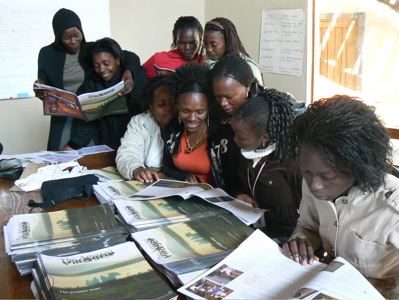
I’ve been spending a lot of time with magazines lately, both as a means of planning submissions and as a source for inspiration. Narrative Magazine is an online literary journal; in its five years of existence, it has blazed a path of great prestige in the online world. To say you have been published by them means that you are Well On Your Way (if you aren’t already There); in the journal’s current issue are essays by Gail Godwin and Bill Barich, both Guggenheim fellows, fiction by a woman named Ann Pancake, who I happily discovered a few years ago, and poetry by Ted Kooser – the US poet laureate from 2004-2006 – among others.

Whether the writing featured in Narrative is by Guggenheim fellows or by up-and-comers, I’ve found it is consistently engaging, moving, solid and smart. Yesterday, I read a piece by Wendy Sanford called “Bodies.” It depressed me. In fact, it depressed me and the depression stayed with me – which is always proof of good writing. This morning, I read the magazine’s excerpt of Gail Godwin’s “Solo Notes,” and got inspired – and the inspiration has stayed with me. I will feast upon Narrative’s pages until I’ve read each piece even if its writing makes me angry for an entire day, or wistful, because there is such joy and satisfaction that comes from reading good sentences, such affirmation to be found in reading about Things That Matter.

In my opinion, there are few magazines – in print or online – that offer readers such fine work with such consistency. The Establishment once dismissed online publishing as unsophisticated – akin to self-publishing and self-promotion – but we are living in a digital age, and digital media has begun to become very sophisticated, indeed. Best of all, Narrative is free!

31

 94425785_d6a2c74601.jpg

Last week, I turned 31.  Age doesn’t bother me much, mainly because I still feel young and because I know I am loved.   I have found that this second, sappy-sounding factor goes a long way in securing youthfulness – and I’m not talking just about romantic love, but dog-love, friend-love, God-love, whatever sort of love comes around.

I’ve been thinking about this a lot lately because of a birthday gift my husband gave me.  We went to dinner at one of our favorite restaurants, and when we sat down in the booth he brought out a fat stack of envelopes and put them on the table. APK is one of the funnest and/or most mischievous people I know; in the seven years we’ve been together, he’s taken me on scavenger hunts, stumped me with riddles that lead to great surprises and planned curiously creative Mega-Dates (a term he coined).

So – I was intrigued, but not surprised, to see a stack of envelopes in front of me on the dinner table.  There were thirty-one in all.  APK explained that instead of writing me a note in a birthday card, he’d decided that it would be more fun if he wrote down thirty-one things he admired about me on individual sheets of paper and sealed them in individual envelopes and let me open them one at a time.

This may be one of the best gifts I’ve ever gotten, and I still haven’t even opened all the envelopes.  Some of the messages APK wrote down for me are romantic, but not all of them.  Many of them are empowering compliments, compliments that remind me to rest and be who I am, or to write what I want to write, or to remember, simply, that I am loved.  I put the notes and envelopes in a box, and it’s like the box is filled with magic.  When I am tired or grumpy, or when I stop believing in myself, or when I wish someone were around to say something nice to me, I pull out the notes and my day is at least incrementally better, if not turned around completely.  I think I’m going to decorate my office with a few of them.

I wish everyone had a box like this; in fact, I think everyone should.  People don’t offer others sincere compliments often enough.

After my graduation from college I went on a road trip out West with two good friends, ML and CF.  Somewhere between Wenatchee, Washington and Redding, California, we started playing “The Compliment Game.”  The Compliment Game’s objective was to make everyone in the car feel great, to tell each person encouraging things we’d heard other individuals say about them, but that they’d never heard directly.

One friend might have told me how great CF’s witty sense of humor is, for example, or what a calming presence ML has in times of crisis, but the compliments never quite made it to the intended recipient.  For almost an hour, we connected the dots, making quick work of a long drive and forming one of the two-week trip’s more memorable moments.  I don’t even remember now what compliments were offered to me then, but I remember feeling totally surprised by them, as if I’d just opened a little envelope made out, especially, to me.

Giving people compliments can be a difficult thing to do, especially if the recipient isn’t someone you know well.  Doing so requires humility, a willingness to be somewhat vulnerable, and an intrinsic belief in one’s self.  But it’s also life-giving and can therefore be addictive – kind of like a service project that only requires you to be sincere.

Monkeys & Such

1911583483_af2c3ff19d.jpg

There is a man in our neighborhood who walks the streets with a monkey on his shoulder. The monkey is small and brownish-black and is always partially shrouded by his owner’s gray hooded sweatshirt. The man walks with a long gait. He is tall and lanky, has a coarse gray beard like his monkey’s.

Sometimes the man’s lady friend walks with him; she is petite and blonde and appears to be the monkey’s lookout. When an official-looking car drives by, the blonde keeps power walking while the man makes sure his hood is up and turns his back to the street, as if he is checking out a house for sale. Nevermind the long, black primal tail trailing from his hood, or the blank little face that sometimes peeks around to see what’s up. It is a weird arrangement, and although I’ve been observing it for almost three years, seeing the monkey peeking out from the hooded sweatshirt still catches me off guard.

When Ivy and I are on the street and we happen to pass this odd pair, the monkey bounces and chitters while the man hisses and kicks in the air to keep Ivy away. I wonder what sorts of diseases the monkey carries and I give the man annoyed, peevish looks. The man wears mirrored sunglasses, so I have no idea what sort of looks he’s giving me.

I’m not sure why I’m blogging about this except that I think it’s so interesting that we have a man who ambles through our neighborhood with a real, live chattering monkey on his shoulder; I also don’t often have the occasion to mention this odd neighbor in casual conversation. If he were friendlier, I would ask him for his story. I wonder where he works and if his co-workers know he owns a monkey; I wonder where the monkey came from and what he does when not shrouded by his owner’s sweatshirt hood.

There is also a man who runs around our neighborhood at night carrying an empty plastic grocery bag with him; he appears always to be training for a marathon, always completely exhausted. He stutters. He throws imaginary sticks for Ivy and tries to strike up conversation about the weather, or about dogs. But because he keeps running as he talks, our conversations never get far.

Another guy bikes through our residential streets wearing huge headphones, thick glasses, a black baseball cap, a t-shirt, a backpack and cargo shorts. His hair is long and curly and flows wildly out of the baseball cap, which makes him look like a boy – slightly unkempt; completely free. I always expect to see him coasting down a hill with his arms up-raised, and although he never does this, seeing him ride his bike so joyfully makes me happy.

I am glad to have these odd people in the world. Which is not to say that I want any of them to follow me home or that I have come to like the monkey-man. But I admire their weirdness, how life has not made them so tired that they can no longer be themselves, can no longer walk with monkeys on their shoulders or throw imaginary sticks. These three men are harmless, but I know people who would be afraid of them because they are different. I try not to be that way.

Lately, I’ve been trying to read a little poetry every day. These few lines are from Mary Oliver’s poem “When Death Comes”:

And therefore I look upon everything
as a brotherhood and a sisterhood,
and I look upon time as no more than an idea,
and I consider eternity as another possibility,

and I think of each life as a flower, as common
as a field daisy, and as singular,

and each name a comfortable music in the mouth
tending as all music does, toward silence,

and each body a lion of courage, and something
precious to the earth.

When it’s over, I want to say: all my life
I was a bride married to amazement.
I was a bridegroom, taking the world into my arms.

Color Me Beautiful

126836000_c7eb36d46f.jpg

For a writer, I have woefully expensive taste.  I have always been this way.  If asked which of four silver bracelets, pairs of running shoes or pieces of china, I like best, I will, without hesitation, choose the most expensive of the bunch.  (I’ve tested myself on this several times, hiding my eyes from the prices of said items.)

I come by this honestly, right down the maternal line.

In the old days, my grandmother, Doll, drove an hour and a half from her Tidewater home to Richmond, Virginia to shop at a lovely department store named Thallheimers.  She had a weakness for fitted ultra-suede suits,  sleek Ferragammo high heels and well-tailored, stylish hats.  After buying three, sometimes four, hats from the department store’s millinery, she would return home – well before my grandfather – with booty in tow.  Doll would show just one of her day’s purchases to my grandfather and stash the rest of the big, round hat boxes beneath her four-poster bed.  After a reasonable amount of time had passed, she would pull another hat from her stash.  My grandfather never knew the difference.

My mother, too, has a weakness for beautiful things.  She loves new cars, bed linens made of high-thread-count cotton, good jewelry and dogs with distinguished pedigrees.  My father, unfortunately, did know the difference, so there were no hidden hat boxes beneath her bed, just as there are no hideaways beneath mine.

Nevertheless, I’ve maintained my penchant for small luxuries: pedicures; magazines; Mrs. Meyers geranium-scented counter spray; and good makeup.  Yes – makeup.  While I’m sure that Maybelline and L’Oreal make stuff of fine enough quality, I am drawn to the mall’s shiny, crystal clear makeup counters with an urgency that defies intelligence.  I revel in the sheer vanity of good makeup, the blissful thirty-minute makeover sessions, the glee reaped from new cheek colors and sparkling eye shadows, perfectly sculpted lipsticks and luminescent glosses.

Last week, this weakness got the best of me.  After a lengthy day of writing and tutoring, I had plans to meet a friend for coffee.  Only traces of the scant makeup I’d put on in the morning remained.  Dark circles, intensified by droopy mascara, ringed my eyes.  I looked this way partly because I’d applied my makeup while driving that morning, and partly because I’d recently run out of concealer.  But the mall was on the way, and I imagined I could pop in to Nordstrom’s quickly and solve two problems – the droopy circles and my need for new concealer – at once.

I’ve read enough copies of Allure magazine in my lifetime to know that a girl should never go to a makeup counter looking the way I did, and that, once there, she should say, “I need concealer number 3,” not, “I’m looking for concealer, but I’m not sure which shade.”  Yet, I broke both rules.  With raccoon eyes and disheveled hair, I shuffled over to the TM counter and asked for help.

Jeanie, a perfectly powdered saleswoman, took one look at my bulging belly and faded foundation and her eyes lit up.  She’d just hit pay dirt.  Before I knew it, I was in the midst of a hard core makeover.

“What kind of foundation do you use?” Jeanie asked innocently.  I explained that my foundation was actually a tinted moisturizer, made by TM Competitor X.  She rolled her eyes and shook her head, as if I’d just told her I put dog food on my face each morning.  When she asked how I applied my makeup (to which I actually responded “with my fingers, in the car”) I knew I was in deep trouble.

Jeanie assured me that after thirty minutes with her (and a hefty sum spent on new TM makeup) I’d become the most beautiful pregnant person the world had ever seen.  She complimented me on my beautiful skin (once “good” foundation was applied), my motherly glow (once brightener was applied), and she feigned disbelief when she learned I’d recently entered my third trimester (unfortunately, no high-end makeup to help the bulging belly, but she could probably tell I needed the compliment).

Under normal circumstances, I’d like to think I’d see through Jeanie’s ruse.  But, in the thrilling midst of the high-gloss makeover, I buckled.  Would I like the brightener?  Yes.  The concealor?  Certainly.  The new foundation?  But of course.  A professional brush with which to apply my high-end makeup?  You bet.  The kicker came when Jeanie convinced me I needed a new TM makeup case to help me stay organized once Baby K arrives.  I can’t believe I said yes to that, but I did. At least when Jeanie asked (with new urgency) if I needed any mascara, I resisted.  Everyone knows only the truly duped fall for makeup counter mascara.

I left the mall feeling utterly taken, but – now at least this is true – prettier than I have in a while.  Thankfully, Nordstrom’s accepts returns on unopened makeup (and overpriced makeup organizers), and Jeanie wasn’t there the following day to rebuke me.

Don’t worry – I kept the concealer … and the foundation … and the brightener … but I took all the other stuff back.  If Gay Talese could indulge in handmade Italian suits and leather shoes at the beginning of his writing career, a little good makeup won’t hurt mine.

Interpreting Joy

bloomingpetals40x40.jpg

Earlier this fall, I founded a little artist’s group. I knew from previous freelancing experience how isolating (and depressing) it can feel to sit at home all day without access to humans except via email, and I was keen to find a way around that problem this go-round. At the recommendation of a knowledgeable friend, I picked up a book called The Artist’s Way, aimed at nurturing the creative spirit. The author, Julia Cameron, suggests readers form “creative clusters” for support and community.

My creative cluster consists of Kristina, a visual/decorative artist, Kerie, a photographer, Natasha, a graphic designer, and Laura, also a photographer – all women I respect and admire not only for their artistic talents, but also for who they are as people. Although we’re all in different creative fields, when we meet, we discuss the same sorts of things – how to balance art and commerce; what to do about taxes incurred by our small (tiny!) companies and how to bar against them; where to fill our creative wells, etc.

As I was leaving our group this past Monday, Kristina and Kerie began talking about the nature of their work. Kristina’s paintings are full of color, joy and life. She uses pink paint, often. Her work is bold, with a fun flare, and beautiful. Kerie does all sorts of photography (weddings pay the bills), but enjoys her work with children the most. She loves to bring out their liveliness and innocence, captures sly, mischievous smiles and quirky personalities.

Both girls talked about their peers from art school, who were so focused on finding reflective meaning within their paintings and photographs that they seemed to discount the value of something that was simply beautiful, or dear. I remember feeling a similar tension while studying poetry in college. It seemed all “legitimate” poets were writing about fear, death, longing or depression. With varying degrees of success, my peers there followed suit. I sort of tried to walk into the shadows, but always felt I came off as a sham, and there’s nothing worse than insincere poetry.

Still, the “true artist” stereotype sometimes serves as a deterrent to my own work. I imagine that I will not achieve real success with my writing unless I addict myself to an illicit drug (or maybe just some painkillers), go crazy or become madly self-centered. Unfortunately (I mean, fortunately), I’m just not wired that way, and I kind of like my balanced life as it is. I try to remind myself that there are plenty of wonderful, “legitimate” artists out there whose work has tracings of both light and shadow, who are not destitute, and whose lives are not in shambles.

But the question remains, can art be joyful and still be considered art? I think so. If all artists were tortured souls, searching for an outlet for their grief, the world would be in a very sad state, indeed.

FYI: The painting, above, is by my friend Kristina.  It is one of my favorites.

Ciao!


100_0242.JPG

Our dog, Ivy, is under the bed. She has been there since Andrew pulled the big, black suitcase out of the attic and began loading it with clothes. We are going to Italy – for two weeks.

Ivy has separation anxiety. And, now that I work from home, she is even more clingy than she used to be. She has known that something is up for a few days: Our neighbor, B, who will be keeping Ivy for us for a while, came over to learn the ropes. Ivy eyed B suspiciously as I pointed out the location of her bed and gave instructions on her feeding schedule. She growled at B’s beautiful, sweet Great Dane, Bella, when Bella got too close to me. After B left, Ivy looked at me quizzically, wagging her tail, as if hoping that pure cuteness might win herself a place on the plane.

Sometimes I wonder if I also have separation anxiety when separated from Ivy. My own personal therapy dog, Ivy can always calm me when I’m stressed, comfort me when grieving, cheer me when nothing else will do, and add joy to the most joyful moments. Tonight, as I packed, I packed guiltily; I wondered what sorts of treats (peanut butter bones? doggie ice cream?) I could get for Ivy that would comfort her during our 2 week absence. None seemed sufficient.

Andrew and I would have fun with Ivy in Italy, but she probably wouldn’t be welcome in the Uffizi, or in the Vatican, or in any of the little farmsteads where we plan to stay. So, it’s best that she wait here for us in America, with Mac – which means you, also, will get a little break from me.

Ciao!

Libraries Burning

A few years ago, after Andrew and I first got married, we quit our jobs and blew our savings on the trip of a lifetime. We had friends in Australia and New Zealand who had offered us a place to stay (rent-free) for a few months. Some other American friends had gone to South Africa on a similar savings-blowing trip. They introduced us to their South African friends, Garth and Bridget, who extended hospitality by way of their Cape Town home’s back wing, complete with kitchenette and private entrance.

South Africa was first on our four-month travel itinerary. While there, Garth & Bridget gave us an old maroon Honda Accord to drive; they invited us to join them for dinner almost every night of our month-long stay. They welcomed us as though we were long-lost family members, as if they had known about us from birth and were overjoyed to lay eyes on us at last. Theirs was a welcome that far surpassed any Southern graces I have ever known.

Yet, I arrived in South Africa full of distinctively American anxieties. I was somewhat fearful of contracting malaria, worried about the place’s fledgling democracy and unrest resulting from its 40% unemployment rate, nervous about the rampant cases of HIV and AIDs, the sort of stuff – rapes and racial tensions – I’d read about in J.M. Coetze’s Disgrace.

In reality, the country was no less complex than that which I had imagined (though it was less dangerous), but it was also significantly more beautiful – in people and geography – than I could have guessed. Andrew and I spent days walking around Cape Town, driving across mountain ranges, drinking great South African wine. When we mentioned we wanted to see other sides of S.A., Bridget, a nurse, introduced us to some friends who worked in a poor township’s orphanage; the babies there, all HIV-positive, crawled all over us, touching our faces, hungry for human warmth.

A friend who had spent many years in Tanzania once said of the continent: “Africa just gets in your bones,” and it does. When we left, I felt a piece of it had become a part of me.

Happily, when I enrolled in my MFA program, I met a young woman named Maggie Messitt. Maggie is an American narrative journalist based in a small town in South Africa; in addition to telling the stories of her South African neighbors, she has singlehandedly started a non-profit organization charged with the purpose of teaching young South African women how to tell their personal stories and their country’s stories. She calls the nonprofit “Amazwi,” which means “voices” in Zulu.

In any country, the effort to train and empower writers to record their lives and celebrate their native cultures could be regarded as a significant contribution to humankind. But add to this the staggering numbers of parents who die before their children are old enough to speak (due to AIDs), the nonexistence of public libraries, and the view of education as luxury, and the importance of the written word looms even larger.

Amadou Hampate Ba, a Malian writer and UNESCO representative, has said, “In Africa, when a man dies, it’s a library burning.” Thanks to Maggie Messitt and her dedicated staff of volunteers, this is slightly less true for South Africans. Their “libraries” databases are being preserved; through the Amazwi students’ narratives, the stories, languages, wisdom and experience of elders are finding a place in a quietly emerging canon of African literature.

This morning, I received an email update from Amazwi which included a poem written by one of the program’s students, Amukelani Mashele. Inspired by her Shangan heritage, she writes:


I work hard to leave footprints wherever I step

I never let challenges bring me down, so I dare anyone

I refuse to let someone judge me because,

Of Xitsonga that I speak or fair colour of my skin

Who can love me more than my own self? …


I am my own favourite person …


I am proud to support an organization that seeks to preserve national history while empowering young women to find their own voices, women who “work hard to leave footprints wherever [they] step”; women who maintain such self-respect that they can write, without twittering with insecurity, “I am my own favourite person.”


To learn more about Amazwi’s aims and programs, and its new literary magazine, A., please click on the Amazwi link on my blogroll or go to http://www.amazwi.org.


Play

399346124_bb34b7382b.jpg

“In a world continuously presenting challenges and ambiguity, play prepares them for an evolving planet.”

– Bob Fagan, on why bears play

Last night, after a particularly frustrating day of wanting to write, but with no words at all forming on the page, I went to the gym. Some people go to the gym and really look forward to it. Unfortunately, I am not currently one of those people.

So, I scuttled on over to Adrenaline last night at the last possible moment (8 pm) after telling myself I was only allowed to listen to a recent NPR podcast if I were walking briskly on the treadmill. (I know – this shows what a nerd I really am. Most normal people listen to hip-hop at the gym. I listen to NPR.)

My mother-in-law told me about a recent episode on Krista Tippett’s Speaking of Faith program in which Tippett interviewed Dr. Stuart Brown, founder of the National Institute for Play. Brown has observed animals in the wild at play, dogs at play, kids and grownups at play. He has also studied convicted killers who all have one very striking thing in common: as children they were not given the opportunity to play. He talks about making eye contact with kids at play and letting them learn empathy through sometimes scary-looking wrestling and rough-housing. He is a proponent of skinned knees and daring. But these lessons are not just for kids, says Brown: he gives himself a couple of hours every day committed to his own favorite past-times: reading, playing with grandchildren, letting his imagination roam. Some of his adult patients have re-learned how to play by learning how to play musical instruments, taking dance lessons, fencing lessons, or diving in to visual art.

To hear Stuart Brown speak of these things is to reconsider life and culture in America. We as a people, especially in these difficult times, are driven to exhaustion by work: thoughts about our work, analysis of other people’s work (think of all the energy we spend on G.W. Bush’s job …), considered safeguards for our kids bodies so they will continue to work, etc. We give ourselves a hard time for taking too much vacation, or for lingering a little too long by the water cooler. On a day spent “writing” (unproductively), I begrudged the 45 minutes (or was it longer?) I spent checking personal email, chiding my playful, friend-loving self for wasted time, for not being serious enough. You get the picture.

But Dr. Brown contends we are funding cheap thrills will all this work, trading that which is truer and more eternal for material happinesses and the satisfaction of doing what we feel we “should” do.  The benefits of play abound. His research has found that playful people cope with stress better than non-players; their brains are better developed and their overall adaptability, character, and decision-making skills are more sound.

I left the gym feeling like a new person, and not because I’d paid my penance there. To think of play in this stage of life as something that is not just permissible but prescriptive is a truly amazing thing. I drove straight home and chased Ivy around the house. Today, I gave myself a reading break (for fiction, no less!) in the middle of my work day. On Saturday, I’ve got plans to go to the Annie Liebowitz exhibit all by myself – and all of this because of Stuart Brown. (I had a great writing day – by the way – thanks to the guiltless break.)

I hope Stuart Brown starts a revolution. What a wonderful thing it would be if we could start solving cultural and religious differences on playgrounds instead of battlefields, or if people stuffed into office cubes insisted, for their mental and emotional health, on making for themselves weekly or daily play dates, doing only what they themselves want to do, not anyone else.

If you need a more persuasive argument for why being playful is such a valuable thing, go to http://www.nifplay.org. There’s a link on their website that will lead you to the NPR page where you can download Tippett’s free podcast.

Art

In May of ’06, I lost my dad quite suddenly, from a heart attack. For almost all my life, and for a great big chunk of his, he’d had heart problems, and in recent years he’d begun to slow down more. Still, his death, at 68, seemed so untimely. It opened up a gap in my life as expansive and horizon-hitting as the acreage my dad once farmed.

This gap had to do with loss, of course, but there was something more to it, too. It required of me a shift in identity, a recognition of the place where I grew up – that was so dear to him – as something I would have to claim for myself.

For months, when I would go back home, I felt my dad’s lumbering presence everywhere. He was a deliberate man, an aspect of his personality that has outlived him. Years ago, he planted maple trees in our front yard based on what color they would turn in the fall – how they would blend with the landscape – just one of many examples I could use to illustrate his particular nature.

He had walked the fields around our house for so many years, it was unbearable to be there without his interpretations of the weather or his critical explanations of why the cattle in the new barn by the creek (an addition made by the inexperienced farmer he’d sold the land to) bawled all night long. In the midst of this absence, I found myself needing to make room for my own presence there, to be known less as Ned Allison’s daughter than as someone who could claim a piece of the town and the land I’d grown to love for myself.

My intensified connection to the farm also made it harder to live in the city – a place with which I have always felt a bit at odds for the anonymity it forces and for the astronomically high prices it asks for less than an acre of land.

I write all this by way of explanation for the painting displayed at the top of my blog. Last Christmas, my husband gave me the most touching, thoughtful gift I’ve ever received. It was a proposal more than anything else – for us to find an artist to go to Virginia and paint the farm, so that I could always have a piece of it here with me.

We found Brett Weaver at a gallery down on Bennett Street. He lives in Tennessee, not too far from where I grew up, and he paints gorgeous landscapes touched by clouds that look totally real and alive. We asked him if he’d go to Virginia and do some studies for us. He said yes. When he got to my parents’ house, my mother had made him a box lunch and some lemonade. He painted three studies in the course of a day and we loved them all. The one at the top of my blog is a side view of my grandfather’s house, where my dad grew up.

This one is the view of the family farm from across the railroad tracks, where our land ends and someone else’s begins.

towlesk1.jpg

And this one is the view of the landscape from our screened porch:

towlesk3.jpg

My dad would have been proud. To see more of Brett’s landscapes, go to http://www.brettweaverstudio.com.

An Uncommon Joy

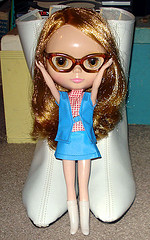
A likeness of Towles & Go-Go Boots

I chose WordPress as the place to house my blog because I liked its name, the imagery of it. Sometimes, I imagine myself working in a big word press. Not a Gutenberg-style word press but alone, at a really cool-looking old table, pressing words, by hand, into paper – with something like hot wax.

I imagine how long it would take me to write an essay using hot wax and my own personal, homemade word press and am then infinitely grateful for my Mac.

Anyway, I recently wrote a book proposal for the manuscript born of my MFA program. I think it’s a pretty good manuscript, and I normally don’t think such things of my writing, but I worked really hard on this one (while holding a full-time job) and I nearly lost my mind in the process. (All real writers lose their minds, don’t you know?) Plus, I had some really great teachers.

As I wrote my manuscript, I sometimes imagined myself as a contestant on that TV show “The Biggest Loser.” I came into the MFA program with a lot of fat in my writing – overly-rosy, wheezy sentences; a tone that one especially keen mentor likened to a voice-over on a History channel war special – and no idea how to lose it. There were lots of people counting on me, expecting me to get better, to surpass the goals I’d set for myself. That this process of mine was not actually part of a reality tv show could not be more of a blessing. These past two years have been a little messy.

But what I realized throughout the manuscript-writing process was this: facing scrutiny is an uncommon joy. It is exhilarating; stomach-squeezing; life-giving. Without it, all good ideas die in the word press.

And this is something I love about education. Something I love, specifically, about being taught. Within the realm of education, as long as it leads to realization, we are allowed to fail and flounder. We are never too lean or too old or too talented to learn something vital; to reach into criticism (terrifying as it may be) and grow; to find ourselves on some surprising, splendid plain of reason thanks to the caring, carefully incisive wisdom of people who have been there, who urge students forward and out of whatever comfortable, simple life-rut they’re walking in.

I don’t have the slightest idea what will come of this manuscript, my book proposal, the strange mating dance we writers have to do to woo an agent. But I am bolstered by the teachers who have believed in me and in my writing, by both the encouragers and the criticizers. Without them, I’d be off working as a compliance officer in some financial services firm (this is only a very slight exaggeration), or washing windows, or wearing go-go boots.

So, here’s to teachers … and uncommon joy.